If you’ve ever stood in a petrochemical plant, a power generation facility, or a food processing factory, chances are you’ve passed hundreds of heat exchangers without noticing them. These unassuming pieces of equipment quietly transfer heat from one fluid to another—whether heating crude oil before refining it, cooling steam in a power turbine, or pasteurizing milk. Among all the types on the market, fixed tube sheet heat exchangers (FSTHEs) are some of the most widely used, and as a supplier who’s worked with manufacturers, plant operators, and maintenance teams for over a decade, I can tell you they’re not just popular by chance. Fixed Tube Sheet Heat Exchangers
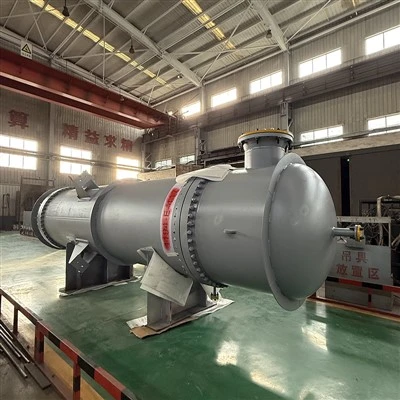
A few years back, I got a call from a small refinery operator in the Gulf Coast who was frustrated with their shell and tube units. They were switching to a new type of process fluid that was corrosive, and their previous units kept leaking. When I showed them a fixed tube sheet design, they were skeptical—until I walked them through the practical, cost-saving benefits we’ve seen hundreds of customers rely on. That call turned into a long-term partnership, and it’s reinforced why FSTHEs remain a staple in industries that need reliable, low-maintenance heat transfer. Let’s break down the advantages that make these units stand out, straight from the perspective of someone who builds, installs, and supports them every day.
First, let’s start with the most basic advantage: simplicity in design translates to lower upfront and long-term costs. Unlike other heat exchanger types, like U-tube or floating head units, a fixed tube sheet design has no moving internal parts. What does that mean for you? Less complex manufacturing, first of all. When we fabricate our FSTHEs, we don’t have to account for the delicate mechanisms of a floating head—no packing glands, no split bars, no internal floating heads that need precise alignment. That cuts down on material and labor costs during production, which we pass on to our customers without sacrificing quality. For plant operators, that means a smaller capital expenditure compared to more intricate designs, which is a big deal when you’re budgeting for new equipment or upgrading an existing line.
But the cost benefits don’t stop at installation. Fewer moving parts also mean fewer points of potential failure. In the years I’ve been in this business, I’ve seen floating head units develop leaks around the packing gland due to thermal expansion, or U-tube units develop stress cracks in the bent tubes from repeated heating and cooling. Fixed tube sheets eliminate those specific issues because the tubes are rigidly attached to the tube sheet at both ends—no movement to create wear and tear. That translates to less unplanned downtime, which is the single biggest expense for any industrial plant. A refinery shutdown can cost tens of thousands of dollars per hour, so avoiding unexpected repairs is non-negotiable for many of our clients.
Next, FSTHEs excel at handling high pressure and high temperature applications, two requirements that are non-negotiable in heavy industries. Let’s be clear: not every heat exchanger can withstand the extreme conditions of refining, power generation, or chemical processing. U-tube designs often struggle with high pressure because the bent tubes are under extra stress, and floating head units have gaps between the head and shell that can leak under extreme pressure. Fixed tube sheet units, on the other hand, distribute pressure evenly across the entire shell and tube bundle. We regularly build our units to handle pressures up to 300 bar and temperatures up to 550°C, which makes them ideal for the harsh environments where many of our customers operate. I’ve had a power plant customer tell me they switched to FSTHEs after a U-tube unit ruptured at 280°C, causing a two-day shutdown. Since they installed our fixed tube sheet units three years ago, they haven’t had a single pressure-related failure. That kind of reliability is hard to put a price on.
Another underrated advantage is their compatibility with a wide range of materials and process fluids. Because the design is simple, we can easily construct fixed tube sheet units from a variety of metals—carbon steel, stainless steel, titanium, Hastelloy, even exotic alloys for highly corrosive fluids. Many of our customers work with acids, alkalis, or abrasive slurries, and we can match the tube and sheet materials to the exact properties of their process fluid to minimize corrosion. Unlike some other heat exchanger types, which are limited in the alloys they can use because of internal mechanisms, FSTHEs’ straight tubes are easy to fabricate with almost any compatible material. We’ve built units for a food processing plant with sanitary stainless steel tubes, and another for a chemical plant with titanium tubes to resist hydrochloric acid. That versatility means we can tailor a fixed tube sheet unit to fit almost any application, from low-temperature pasteurization to high-pressure gas processing.
Maintenance is another area where fixed tube sheet heat exchangers outperform many alternatives. I know what you’re thinking: “If the tubes are attached at both ends, how do you clean them?” It’s a fair question, and here’s the answer: for most applications, FSTHEs are designed to be cleaned without removing the tube bundle. The straight tubes allow for easy mechanical cleaning—using brushes or pigging tools to remove scale, sediment, or biofilm from the inside of the tubes—or chemical cleaning circulated through the shell side. For applications that do require bundle removal (like if the tubes are severely fouled), the fixed tube sheet design makes that process simpler than with floating head units. With a floating head, you have to disassemble multiple internal components to pull the bundle, which can take hours. With a fixed tube sheet, you only need to unbolt the shell cover and lift the bundle out in one piece. That cuts down on maintenance time and labor, which is a huge plus for plants that run 24/7 and can only schedule maintenance during short shutdown windows.
I should also mention the compact footprint of fixed tube sheet heat exchangers, which is a big selling point for plants with limited space. Many industrial facilities are working with aging layouts that don’t have room for large, complex equipment. FSTHEs are more compact than floating head units because they don’t require the extra space for the floating head mechanism. U-tube units are also compact, but as I mentioned earlier, they struggle with high pressure and have higher maintenance costs. Our fixed tube sheet units deliver the best of both worlds: a smaller footprint that fits into existing plant layouts, without sacrificing performance. A client in a crowded chemical park once told us that their new FSTHE fit in the same space as their old U-tube unit, but transferred 20% more heat. That kind of space efficiency is invaluable when you can’t expand your facility.
Of course, no piece of equipment is perfect, and I’m honest with customers about the limitations of fixed tube sheet heat exchangers. They’re not the best choice for applications where the two fluids have a large difference in thermal expansion, because that can create stress between the tubes and the tube sheet. For those cases, a floating head or expansion joint design might be better. But for the vast majority of applications—around 70% of the industrial heat exchanger market, in our experience—FSTHEs are more than capable, and their advantages far outweigh any minor drawbacks.
Over the years, I’ve built FSTHEs for all kinds of industries: petrochemical, power, food and beverage, pharmaceutical, even HVAC. Each time, the feedback from customers comes back to the same things: lower costs, fewer failures, easier maintenance, and reliability in harsh conditions. I’ve seen small refineries go from monthly shutdowns to once-a-year maintenance, food processing plants improve pasteurization consistency, and power plants reduce their energy costs by 15% by upgrading to our fixed tube sheet units. That’s why, even as newer heat exchanger designs hit the market, FSTHEs remain a go-to for so many operations.

If you’re looking to upgrade your heat transfer equipment or troubleshoot recurring issues with your current units, fixed tube sheet heat exchangers are worth a close look. Our team has decades of experience designing, fabricating, and installing custom FSTHEs to fit your specific process needs. We work closely with every customer to assess their pressure, temperature, fluid compatibility, and space requirements to build a unit that delivers long-term performance and value. Whether you’re a small plant operator or a large industrial facility, we’re here to help you find the right heat exchanger solution for your operation. To discuss your requirements and get a tailored quote, we encourage you to reach out and connect with our team. We’re ready to walk you through the details, answer your questions, and help you make an investment that will pay off for years to come.
Heat Exchanger References
- API Standard 660: Shell and Tube Heat Exchangers for General Refinery Service, American Petroleum Institute, 2019.
- Heat Exchanger Design Handbook, 5th Edition, Hemisphere Publishing Corporation, 2005.
- Kohl, B. D., and Rietjens, R., “Selection of Heat Exchanger Types for Industrial Applications,” Chemical Engineering Progress, Vol. 110, No. 8, 2014, pp. 32-39.
- Tinkler, J., “Fixed Tube Sheet Heat Exchangers: A Cost-Effective Solution for High-Pressure Applications,” Journal of Process Mechanical Engineering, Vol. 227, No. 3, 2013, pp. 245-252.
- Smith, E. M., “Maintenance Strategies for Shell and Tube Heat Exchangers,” International Journal of Process Engineering, Vol. 9, No. 2, 2017, pp. 112-120.
Shandong Meiling International Trading Co., Ltd.
We are one of the most professional fixed tube sheet heat exchangers manufacturers and suppliers in China, featured by quality products and good service. Please feel free to wholesale advanced fixed tube sheet heat exchangers made in China here from our factory. Customized orders are welcome.
Address: No. 998 Niushan Road, Linzi District, Zibo City, Shandong Province
E-mail: dingxiaoli@sdmeiling.com.cn
WebSite: https://www.ml-heatexchanger.com/
