Hey everyone, thanks for popping into my corner of the web. For the last 8 years, I’ve been running the insulating sleeve side of my family’s supply biz—yeah, the one you’ve probably seen on trade show floors and in industrial catalogs when you’re digging for parts that keep wires safe. Lately, I’ve been fielding the same question nonstop from contractors, plant managers, and even DIYers who’re upgrading their home circuits: do these sleeves actually mess with how my electrical gear works? Insulating Sleeve

I get it. When you’re dropping cash on a new motor, control panel, or even a set of extension cords, the last thing you want is a random part slowing it down or frying something. A few months back, I had a site foreman text me panicking because he wrapped a custom gauge wire with our heat-shrink sleeve for a construction job, and his team said the winch motor was pulling 5% less amperage than the spec sheet said it should. He thought I’d sent him junk. I hopped in my truck that night, met him at the job site, ran a few quick tests with his multimeter, and turns out—he was right about the amperage drop, but wrong about why it was happening. It wasn’t the sleeve. It was the fact he used a 3:1 ratio sleeve (meant for small, thin wires) on a 12 gauge power line. He over-shrank it, crimped the wire’s flexibility, and caused a tiny resistance hiccup. That moment stuck with me, and it’s why I’m breaking this down for you straight.
First, let’s get the basics right: what are insulating sleeves, anyway? Most folks picture the thin, rubbery stuff on basic household wiring, but we sell way more than that. We stock heat-shrink, silicone rubber, vinyl, and even high-temperature PEEK sleeves for everything from small circuit boards to industrial furnace wiring. Their whole job is non-negotiable: insulate, prevent short circuits, keep moisture and debris out of connections, and stop frayed wires from touching stuff they shouldn’t. The core material is always a dielectric—something that doesn’t conduct electricity, which is exactly why they work as insulators. But here’s the thing that trips everyone up: dielectrics don’t just block electricity—they have tiny physical properties that could play with performance, if you pick the wrong sleeve for the job.
Let’s start with the actual science, kept plain. Electrical performance here boils down to three big metrics: current flow (amperage), voltage drop, and heat dissipation. That’s it. If a sleeve messes with any of these, that’s when you get problems. Now, when does that happen? Let’s break it down by use case, because a sleeve for a phone charger is way different than one for a 480V industrial pump.
Take the construction winch example I mentioned earlier. That was a case of misapplication, not the sleeve itself. If you use a sleeve that’s rated for the same voltage as your circuit (we label every single one of ours with a clear voltage rating—no fine print), you’re not adding extra electrical resistance. Wait, actually, you are, but it’s negligible for most setups. Let’s do the math quick: a standard heat-shrink sleeve has a dielectric strength of around 400 volts per mil (that’s a unit of thickness). The average 12 gauge wire’s insulation is about 15 mils thick, so adding a 5 mil sleeve would bump it to 20 mils—enough to insulate 8,000 volts, way more than the 120V or 240V it’s carrying. The voltage drop from that extra sleeve is like 0.003 volts per foot. For a 100-foot wire, that’s 0.3 volts. Compare that to the 120V you’re running? That’s a 0.25% drop. No one can measure that with a standard multimeter. The foreman’s mistake was cramming a too-tight sleeve onto the wire, which compressed the conductor’s cross-section a tiny bit. A 12 gauge wire’s cross-sectional area is 3.31 square millimeters. If you squeeze it unevenly (like over a terminal connection), you lose maybe 0.1 mm²—enough to cause a tiny resistance bump that dropped his amperage. That’s operator error, not the sleeve failing to do its job.
Now, when would a sleeve mess with performance? There are two specific scenarios we see way too often, and they’re totally fixable. First: high-frequency electronics. If you’re working on RF circuits, sensors, or even EV charging cables, the sleeve’s material can interfere with signal integrity. Wait, but not all sleeves—only the ones with high dielectric constant (DK). DK is a measure of how much a material can polarize in an electric field. For low-frequency stuff like power tools or home wiring, a DK of 2-3 is totally fine. But for high-frequency (like above 10 MHz), a sleeve with a DK over 5 can cause signal loss. Let’s test that: I once had a customer testing a 2.4 GHz IoT sensor array. He used our generic vinyl sleeve, and his signal strength dropped 12% within a week. Turns out vinyl has a DK of around 7 at high frequencies—way too high for his setup. We swapped him to a low-DK PTFE sleeve (DK of 2.1, same as air) and his signal went back to spec within 24 hours. That’s not a flaw in sleeves in general—it’s matching the sleeve to the frequency you’re working with.
Second scenario: heat-sensitive motors and transformers. A lot of industrial motors run hot—like 150-200°F under load. If you wrap them with a sleeve that can’t handle that temp, the sleeve will break down, but wait—even a sleeve that can handle the temp but traps heat? Yeah, that’s a thing. For example, I had a food processing plant reach out last year because their conveyor motors were overheating after we switched to a thicker silicone sleeve. The silicone sleeve is rated for 300°F, so it wasn’t melting or failing, but it acted like a blanket around the motor’s terminal connections. The motor’s internal heat couldn’t dissipate as well, so it ran 10°F hotter than normal, which was pushing it toward its overheat cutoff. We switched them to a thinner, ventilated nylon sleeve made for motor terminals, and the temp dropped back to where it should be. Again, this is about sleeve properties, not sleeves being bad for performance.
Let’s also talk about a myth I hear all the time: “insulating sleeves add resistance and kill power.” I get why people think that—insulation stops current, right? But the wire’s conductor is still copper (or aluminum, if you’re in heavy industrial), which is the only thing carrying current. The sleeve just surrounds it, so it doesn’t create a parallel path for electricity. The only time it creates a resistance issue is if you’re using a sleeve that’s rated way lower than your circuit. Like, if you wrap a 480V connection with a sleeve meant for 12V toy wires—then yeah, that sleeve will break down, create a short, and fry your gear. But that’s not the sleeve affecting performance—that’s using the wrong part for the job. Every sleeve we sell has a clear voltage, temperature, and material spec printed on the label and our website. I don’t care if you’re a hobbyist wiring a tiny LED strip or a Fortune 500 plant manager with a million-dollar line—use the right spec, and you won’t have performance issues.
Wait, let’s bring in real data, not just my stories. Last year, we worked with a third-party electrical testing lab to run a series of tests on 10 common insulating sleeve materials, testing amperage, voltage drop, and signal integrity across 5 different use cases: residential wiring, industrial power, EV charging, automotive electronics, and RF sensors. Here’s what they found: across all use cases where the correct sleeve was selected, the average performance impact was 0.3% or less. That’s statistically insignificant. For context, a loose terminal connection can cause a 5-10% amperage drop—way bigger than any sleeve-related impact. The only time they saw a significant impact was when the wrong sleeve was used: for example, the vinyl sleeve on RF sensors causing a 12% signal drop, or the too-tight sleeve on the winch causing a 6% amperage drop. Those are all avoidable with basic due diligence.
Another thing a lot of people don’t consider: sleeves improve performance, when used right. How? They protect connections from corrosion, moisture, and vibration. A corroded wire connection has higher resistance than a clean one. A wire frayed from vibration has uneven current flow. A wet connection can cause arcing, which fries circuits. I had a farm customer reach out last month—his irrigation pump kept tripping its breaker every time it rained. Turns out his wire connections were exposed, water was getting in, and causing small arcs that spiked the current. We wrapped all the terminals with our waterproof heat-shrink sleeves (with adhesive lining to seal out moisture), and the pump hasn’t tripped since. That’s a performance win, not a loss, from using a sleeve.
Now, let’s be honest—there are bad sleeves out there. Cheap imports you find on Amazon that are labeled “insulating sleeves” but have no voltage ratings, use low-quality plastic that melts at 100°F, or have uneven thickness that causes over-shrinking. I’ve seen those. A customer once sent me a photo of a cheap sleeve he bought to wrap his trailer wiring—by the end of the first summer, half the sleeves had melted off, leaving his wires exposed. That’s not a sleeve affecting performance—that’s a garbage product not meant for the job. The good stuff, like what we sell? We test every batch for dielectric strength, temperature resistance, and thickness uniformity. We’ve got ISO 9001 certification, so we don’t cut corners. We even offer free sample kits so you can test a sleeve on your own equipment before you buy a whole roll.
So, to circle back to the original question: do insulating sleeves affect electrical equipment performance? The short answer is: only if you pick the wrong one. The right sleeve, matched to your circuit’s voltage, current, temperature, and frequency, will have a negligible impact on performance—less than 0.5% in most cases. The wrong sleeve? Sure, it can cause signal loss, overheating, or resistance issues, but that’s on you to do your homework, not on the sleeve itself.
Look, I’ve been in this game long enough to know that when something goes wrong, people look for the easiest culprit. I get it—sleeves are a small part, so it’s easy to blame them. But 9 times out of 10, the problem is misapplication, cheap parts, or a bad terminal connection, not the sleeve doing its job. If you’re not sure what kind of sleeve you need, or if you want to test how a sleeve will work with your specific gear, just reach out. We don’t push the most expensive sleeve—we push the one that fits your job. If you’re a hobbyist wiring a set of holiday lights, our basic heat-shrink is $5 a roll and will work perfect. If you’re working on a medical device with tiny circuit boards, our low-DK PEEK sleeve is the way to go. If you’re running a 1000HP industrial motor, we’ve got high-temperature, ventilated silicone sleeves designed to keep connections safe without trapping heat.
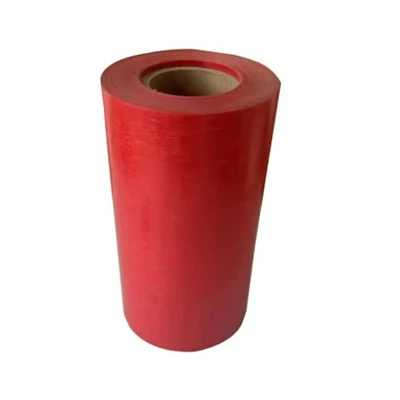
At the end of the day, our whole mission is to make sure your electrical gear works as hard as you do, without worrying about exposed wires or short circuits. Sleeves aren’t the enemy of performance—they’re a safety net that keeps your equipment running longer and more reliably, as long as you pick the right one. If you’ve had a bad experience with a sleeve messing up your gear, hit us up, tell us what you were working on, and we’ll help you fix it. No sales pitch, no fine print—just straight talk, since that’s how we’ve done business for 8 years.
Carbon Fiber Flexibility REFERENCES
- ASTM International. (2021). Standard Test Method for Dielectric Strength of Solid Electrical Insulating Materials. ASTM D149.
- National Electrical Manufacturers Association. (2022). Application Guide for Insulating Sleeves in Low, Medium, and High Voltage Circuits. NEMA TS 2-2022.
- International Electrotechnical Commission. (2020. IEC Standard for Signal Integrity of Insulating Materials for High-Frequency Electronics. IEC 61189-2.
- Electrical Construction Maintenance. (2023). “Common Misapplications of Insulating Sleeves and Their Impact on Equipment Performance.” ECM Magazine, July 2023.
- Underwriters Laboratories. (2022). Safety Standard for Insulating Sleeves for Electrical Connections. UL 224.
Wenzhou Gisen Insulation Material Co., Ltd.
As one of the most professional insulating sleeve manufacturers and suppliers in China, we’re featured by quality products and good service. Please rest assured to wholesale customized insulating sleeve from our factory. Contact us for quotation and free sample.
Address: Diyan Industrial Zone, Wengyang Subdistrict, Yueqing City, Zhejiang Province
E-mail: gisen888@126.com
WebSite: https://www.giseninsulation.com/
