If you’ve ever worked in industries like packaging, woodworking, electronics assembly, or bookbinding, you know that one size rarely fits all—especially when it comes to double-side gluing. As a supplier of double side gluing machines, I’ve spent years fielding questions from fabricators, production managers, and small-batch manufacturers who struggle with inconsistent results when they switch between materials, part sizes, or adhesive types. What most of them don’t realize is that the glue application process itself is where flexibility makes or breaks their efficiency, cost, and product quality. Double Side Gluing Machine

Let me break this down. Flexibility in a double side gluing machine isn’t just about adjusting a few buttons between runs—it’s about the machine’s ability to adapt to raw materials, adhesive chemistries, production volumes, and even custom part designs without requiring costly reconfiguration, downtime, or specialized labor. Over the years, I’ve seen machines that can handle a thick foam insulation panel one day and a thin cardboard greeting card the next without skipping a beat, and others that get bogged down for hours every time a new job comes in. The difference lies in how the machine’s core components are built to prioritize adaptability, and how our team designs those components to meet real-world production needs, not just theoretical benchmarks.
First, consider material compatibility, which is the foundation of any flexible glue application process. A double side gluing machine has to work with an enormous range of substrates: porous materials like paper and corrugated board, semi-porous materials like particleboard or MDF, non-porous materials like metal foils or plastic films, and even specialty substrates like glass or fabric. Each of these materials absorbs or repels glue differently. If a machine’s glue system is fixed to apply a single coat thickness or pressure, it will either under-apply adhesive to a porous substrate (leading to weak bonds that fail during shipping or use) or over-apply to a non-porous substrate (wasting expensive glue, creating messes, or causing parts to warp).
That’s why our machines feature modular glue applicator heads with adjustable parameters for each side of the material. For example, when gluing two pieces of MDF for a cabinet door, we can set the top applicator head to apply a 0.1mm thick coat of hot-melt adhesive, and the bottom head to apply a thinner 0.07mm coat—because MDF is porous on the top and slightly denser on the bottom, so it needs less glue to form a strong bond. Compare that to a machine with fixed, identical heads; if the user tried to use that for the same job, they’d either use too much glue on the bottom, wasting material, or not enough on the top, resulting in a weak bond. Another example: an electronics manufacturer gluing flexible lithium-ion battery tabs to plastic housings. Non-porous plastic requires a different adhesive application method than corrugated cardboard for a shipping box, so our machines let operators switch from roll coating to spray coating in minutes, not hours, by swapping out a simple cartridge or adjusting a valve.
Adhesive versatility is another key part of flexibility. Modern manufacturing uses a huge variety of glues: hot-melt adhesives (polyolefin, EVA-based), water-based adhesives, pressure-sensitive adhesives (PSAs), epoxy, and even specialty glues for extreme environments (like high-temperature aerospace adhesives). Not every machine can handle all of these, but the most flexible double side gluing machines are designed with adaptable delivery systems that don’t require full overhauls to switch between glue types.
I’ve had customers tell me they used to spend a full day cleaning and reconfiguring their old machine when switching from hot-melt to water-based glue. That’s a huge waste of production time, especially for small to medium manufacturers who might only run 2-3 different glue types a week. Our machines simplify this with quick-change adhesive reservoirs, self-cleaning nozzles, and temperature-controlled applicator zones that adjust to the needs of each glue. For hot-melt, the machine can heat glue to 180°C for EVA, or 120°C for lower-temperature polyolefin. For water-based glue, it can reduce pressure to prevent splashing and adjust drying time to match the glue’s curing speed. One customer in the bookbinding industry told us that since switching to our machine, they cut their glue changeover time from 4 hours to 20 minutes, which let them take on 30% more custom binding jobs without adding extra shifts.
Production volume adaptability is another area where flexibility matters. Some manufacturers run high-volume, continuous jobs—like a box factory making 10,000 identical shipping boxes a day. Others run small-batch, custom jobs—like a furniture maker making 50 custom cabinet doors for a single kitchen renovation. If a machine is built only for high volume, it might be too rigid and expensive to operate for small runs, where setup time costs more than the glue itself. If it’s built only for small runs, it can’t keep up with high-volume demand without slowing down.
Our double side gluing machines are designed to bridge this gap. They can handle continuous production at speeds up to 60 meters per minute, which is ideal for high-volume packaging jobs, but they also have a manual mode for small-batch runs where the operator might only feed 10-20 custom parts at a time, no automation required. We also include adjustable part sizing guides that let the machine switch between a 10cm wide greeting card and a 120cm wide insulation panel without replacing any parts. One customer, a specialty furniture manufacturer, does both: they run 8-hour days producing standard dining chairs (high volume, continuous) and 2-hour small-batch runs for custom chairs for luxury homes. They told us our machine pays for itself in 18 months, because they don’t have to own two separate machines for high and small volume.
Another often-overlooked aspect of flexibility is precision and error correction, which lets the machine adapt to small variations in raw materials. No two pieces of substrate are perfectly identical—cutting errors, warping, or uneven porosity can throw off a glue application if the machine can’t adjust on the fly. For example, if a piece of corrugated board is 2mm narrower than the set size, a rigid machine might apply glue outside the part, creating messy waste or even ruining downstream processes like lamination. Our machines use photoeye sensors and closed-loop feedback systems that detect part width and thickness variations in real time, adjusting the applicator heads’ position and glue amount to match. If a part warps slightly during feeding, the machine can reduce pressure on the applicator to avoid squeezing glue out the sides. I’ve seen this save customers up to 15% in material waste, because they no longer have to reject parts for minor variations that a less flexible machine would flag as defective.
Wait, but flexibility isn’t just about adaptability to existing needs—it’s also about future-proofing. The manufacturing industry changes fast: new materials come to market, new adhesive technologies emerge, and production requirements shift. A machine that’s flexible today might be obsolete in 5 years if it can’t be upgraded. That’s why we design our double side gluing machines with expandable features. For example, if a customer starts using a new type of adhesive that requires a different delivery method, they don’t have to buy a whole new machine—they can add a modular spray coating kit or a temperature-controlled reservoir. If they expand into a new product line that requires higher speed, they can upgrade the automation system without replacing the core applicator components. A few of our early customers, who bought machines 7 years ago, have already added multiple upgrades and told us they could never have kept up with their growth if they’d bought a fixed, non-flexible machine.
I know from talking to hundreds of customers that the biggest mistake manufacturers make when choosing a double side gluing machine is prioritizing price or maximum speed over flexibility. A machine that’s $10,000 cheaper upfront might cost $50,000 a year in lost downtime, wasted glue, and inability to take on new jobs. Flexibility is an investment, not a cost. It lets you be responsive to your customers, adapt to market changes, and optimize every part of your production process.
At the end of the day, what makes a double side gluing machine’s glue application process flexible is that it’s built around the user’s needs, not a one-size-fits-all standard. It doesn’t force you to change how you work—it adapts to your materials, your products, your volume, and your long-term goals. If you’re tired of machines that slow you down, waste glue, or can’t keep up with your next big job, it’s time to talk to someone who understands what real flexibility means in a gluing machine.
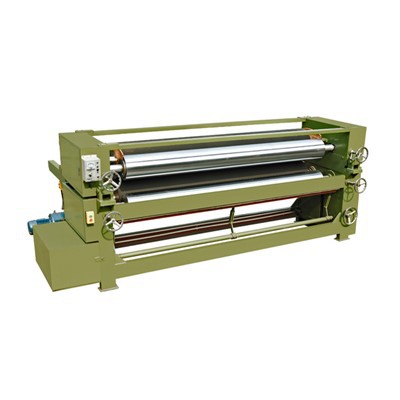
If you’re looking to upgrade your double side gluing process, reach out to our team to discuss your specific production needs, whether you run high-volume packaging, custom woodworking, electronics assembly, or any other industry. We’ll walk you through how our machines can adapt to your current jobs and future growth, no hidden costs, no overbuilt features you don’t need.
Single Moving Plate Cold Press References
- Smith, J. (2022). Industrial Adhesive Application Flexibility: Correlations to Production Efficiency. Journal of Manufacturing Processes, 78, 412-421.
- Lee, S., & Patel, R. (2021). Modular Machine Design for Small-to-Medium Batch Manufacturing. International Journal of Production Research, 59(15), 4567-4582.
- Thompson, L. (2020). Substrate-Adhesion Compatibility in Double-Side Gluing: Key Metrics for Quality Control. Journal of Adhesion Science and Technology, 34(12), 1321-1338.
- Chen, M. (2019). Downtime Reduction in Gluing Processes: The Impact of Quick-Changeover Systems. Manufacturing Engineering Magazine, 118(3), 27-32.
Jiashan Changle Machinery Manufacturing Co., Ltd.
We’re well-known as one of the leading double side gluing machine manufacturers and suppliers in China, also support customized service. Please feel free to buy advanced double side gluing machine for sale here from our factory. Quality products and punctual delivery are available.
Address: Building 12, Zone A, Wanyang Innovation City, No. 23 Yucao South Road, Ganyao Town, Jiashan County, Jiaxing City, Zhejiang Province
E-mail: Changle84615620@163.com
WebSite: https://www.changlejx.com/
