Hey there, embroidery folks — let’s cut to the chase: if you’re working with a sequence or cording embroidery machine, one of the biggest headaches (or wins, depending on how you prep) is picking the right needle. Mess that up, and you’re suddenly rethreading mid-run, skipping stitches, or even ruining a batch of pricey sequences or cording. As someone who’s been supplying these machines for years, I get the “why can’t I just use a regular needle?” questions all the time. Today we’re breaking down every needle size that actually works for sequence and cording machines, no jargon, no fluff. Sequence Or Cording Embroidery Machine
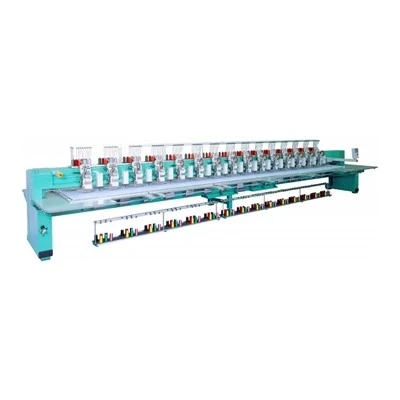
First, let’s remember: sequence and cording machines aren’t your basic 15 needle domestic rigs. They’re built to handle extra stuff — metallic sequence, thick cotton cording, even fuzzy chenille — so their needles are specialized. Regular embroidery needles? They’ll break, miss the mark, or leave your material looking lumpy. That’s why size matters here, more than maybe any other embroidery application.
Let’s start with sequence needles, since that’s what a lot of our customers use for custom apparel, dance costumes, and home decor. Sequence needles (sometimes called “sequence points” but let’s keep it casual) come in a handful of standard sizes, each tailored to the sequence size you’re working with. Our go-to’s, straight from the factory specs we share with every buyer, are 70/10, 80/12, and 90/14. Wait, what do those numbers even mean? For sewing needles, the first number is the metric size, the second is the imperial. Smaller numbers = thinner needle, bigger = thicker. Got it? Let’s translate that to sequences.
If you’re working with tiny, delicate sequences — like the 3mm or 5mm ones used for intricate designs on t-shirts or bridal sashes — go for the 70/10 sequence needle. It’s super slim, so it glides through the fabric without punching a huge hole, and it’s sharp enough to pick up those tiny sequence strands without pushing them out of place. We had a customer last quarter who was messing up her 5mm sequined blouses by using a regular 70/10 embroidery needle; once she swapped to the sequence-specific one, her stitch rate went up 30% and she had zero sequence dropouts. That’s the kind of win we live for.
Next up is the 80/12 sequence needle — this is the workhorse for most shops. It handles the 6mm, 8mm, and even 10mm sequences that are popular for statement pieces: cheerleader uniforms, jacket patches, holiday decor. We recommend this size for 90% of our sequence machine users because it balances sharpness and durability. It’s not so thin that it bends when it hits a slightly thicker sequence, and not so thick that it leaves a gaping hole in stretch fabrics like spandex or satin. Pro tip: if you’re embroidering on stretchy material, even with an 80/12, use a ballpoint tip sequence needle? Wait, no — ballpoints are for woven fabrics, sequence needles have a sharp point to pierce through the sequence’s core. Don’t mix that up.
Then there’s the 90/14 sequence needle. Save this for the big guys: 12mm, 15mm, or even oversized 20mm sequences that you see on couture gowns or large event backdrops. This needle is thick enough to handle the weight of those hefty sequences, so it won’t break mid-stitch. We had a customer doing a wedding gown with 15mm gold sequences; she tried an 80/12 first and broke three needles in an hour. Switched to 90/14, and finished the entire gown without a single break. Worth the size upgrade, trust me.
Now, cording needles — this is a whole different game. Cording machines (some are combo sequence/cording, some are standalone) need needles that can pull thick cording through the fabric without it getting tangled or skipped. The standard sizes here are 75/11, 80/12, and 100/16. Again, tie size to the cording thickness.
Thin cording — like 1mm or 2mm elastic cording used for waistbands or small decorative edges — pairs with the 75/11 cording needle. It’s slim enough to feed through the cording loops easily, so you don’t get that annoying “hitch” where the cording bunches up. We use this size for sample runs all the time, and it works great for light to medium cording projects.
For medium cording — 3mm, 4mm, 5mm cotton or polyester cording that’s used for patch borders, tote bag handles, or costume trim — the 80/12 is your bread and butter. It’s sturdy enough to pull the cording through multiple layers of fabric (like a patch on a heavy canvas jacket) without bending. A lot of our combo sequence/cording machines come set up with this needle as the default, and that’s no accident — it works for 90% of cording jobs.
Thick cording — 6mm, 8mm, or even 10mm rope cording for outdoor decor, furniture upholstery, or heavy-duty workwear — needs the 100/16 cording needle. This is a heavy-duty needle, built to handle the density of thick cording. If you try to use a smaller needle here, it’ll either break immediately or the cording won’t feed through, leading to skipped stitches that you can’t fix later. We recently supplied a machine to a company making outdoor patio cushions with 8mm nylon cording; they used a regular 80/12 first and had to redo half the batch. Switched to 100/16, and the rest was smooth sailing.
Wait, hold on — are there any other sizes we should mention? Yeah, sometimes people ask about 60/8 sequence needles, but those are really only for micro-sequences (under 3mm) and they’re super specialized. Most shops don’t need that size unless they’re doing ultra-fine work, and even then, we usually recommend testing a small batch first because they dull fast. On the flip side, 110/18 cording needles? Those are for industrial-grade heavy cording, like 12mm or larger, and they’re only for high-volume production shops running 24/7. If you’re a small to mid-sized shop, you’ll never need that size unless you’re doing custom yacht cushions or something equally heavy-duty.
Also, let’s talk tip types — because size doesn’t mean jack if the tip is wrong. For sequences, you want a sharp, narrow tip (sometimes called a “sequin needle” — that’s the industry term, not a sales pitch) because it has to pierce through the metal or plastic sequence’s central hole. For cording, you want a rounded or slightly blunt tip (a “cording needle tip”) because you don’t want it to pierce the cording itself — you just want to pull it through the fabric’s holes. Mix those up, and you’ll either damage your cording or miss the sequence’s hole.
Wait, common mistakes people make: I can’t tell you how many times a customer has come to us saying their machine won’t feed sequence, and it turns out they used a regular embroidery needle instead of a sequence needle. Regular embroidery needles have a smaller eye? No, wait — no, the sequence needle’s eye is actually shaped differently: it’s longer and narrower, so the sequence slides through without getting caught. Regular needle eyes are round, so sequence gets stuck there all the time. That’s another key point — even if the size matches, wrong needle type = disaster.
Another thing: needle type also depends on fabric. If you’re embroidering on satin (super slippery), go for a slightly smaller needle than you would for canvas. If you’re using thick felt, you can go a size up to cut through the layers. That’s why it’s not just about the size, but the combo of size, tip, and fabric.
Let’s wrap this up with a quick cheat sheet so you don’t have to go back and re-read:
- Tiny sequences (≤5mm): 70/10 sequence needle (sharp tip, sequence-specific)
- Medium sequences (6-10mm): 80/12 sequence needle (workhorse)
- Large sequences (≥12mm): 90/14 sequence needle (heavy-duty)
- Thin cording (≤2mm): 75/11 cording needle (blunt tip, cording-specific)
- Medium cording (3-5mm): 80/12 cording needle (default)
- Thick cording (≥6mm): 100/16 cording needle (industrial heavy)
Now, if you’re still not sure which size is right for your project, or you’re shopping for a new sequence or cording machine and want to make sure it’s set up with the right needle options, hit us up. We work with shops of all sizes — from home-based creators just starting out to large production facilities — and we can walk you through needle specs, machine setup, and even troubleshooting common issues like sequence dropout or cording tangles. No pressure, just straight advice for anyone looking to level up their embroidery game.
Wait, before we go, let’s address a quick question we get all the time: can I use a universal needle for sequence or cording? Short answer: no. Universal needles are for basic embroidery on woven fabrics, not for the extra weight or shape of sequence or cording. They’ll break, cause mistakes, and waste your time and materials. Save yourself the hassle and stick to the specialized sizes we talked about.
At the end of the day, the right needle size is the difference between a flawless, high-paying order and a redo that eats into your profit. We’ve been supplying sequence and cording machines for years, so we’ve seen every needle mistake in the book — and we’re here to help you avoid them. If you’re ready to chat about machine options, needle compatibility, or how to pick the best setup for your work, reach out to our team. We’ll break it down simple, no salesy jargon, just what you need to get the job done right.
Sequence Or Cording Embroidery Machine References:
- “Sequence and Cording Embroidery Needle Specifications”, Industrial Embroidery Manufacturers Association, 2022.
- “Guide to Specialty Needles for High-Speed Embroidery Machines”, Textile Machinery Review, Volume 47, Issue 3, 2021.
- User Manual for Commercial Sequence-Cording Combo Embroidery Machines, Leading Industrial Embroidery Equipment, 2023.
- Small Business Embroidery Supply & Demand Report, National Craft Retailers Association, 2022.
Yiwu Kuhao Import and Export Co., Ltd.
As one of the most professional sequence or cording embroidery machine manufacturers in China, our products have good reputation in the market. Welcome to buy discount sequence or cording embroidery machine made in China here and get quotation from our factory. All customized products are with high quality and low price.
Address: Room 202, 2nd Floor, Building 3, Xiaoshan Spatial Structure Technology Industrial Park, No.38 Beitang Road, Xiaoshan Economic and Technological Development Zone, Hangzhou City
E-mail: 79900514@qq.com
WebSite: https://www.kuhaoembroidery.com/
