If you’ve ever ordered a bulk shipment of fertilizer, construction cement, or food-grade grain, you’ve likely grabbed hold of one of my company’s functional woven packaging bags—sturdy, tear-resistant, and made to hold up through cross-country truck routes, coastal humidity, and even weeks of sitting in a dusty warehouse before they finally reach their end destination. For years, customers have asked me the same question, usually mid-following-up on a reorder: “How long will these bags actually hold their performance? I don’t want to restock prematurely, and I definitely don’t want a batch that breaks mid-use.” It’s a fair question, and one that doesn’t have a one-size-fits-all answer—because the lifespan of a functional woven bag depends on more than just the material it’s made of. Let me walk you through what I’ve learned over 12 years in this business, working directly with our manufacturing team, testing labs, and the hundreds of farms, construction firms, and food processing plants that rely on our bags every single day. Functional Woven Packaging Bags
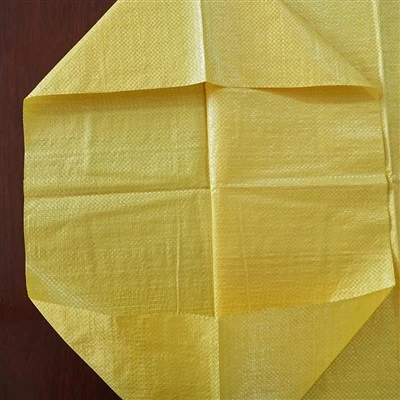
First, let’s clarify what “functional performance” even means for these bags. For a food-grade grain bag, functionality means not leaking kernels, resisting punctures from sharp stones in farm trucks, and not leaching chemicals that could contaminate the crop. For a fertilizer bag, it means holding up to corrosive nitrogen compounds and not fraying at the seams during forklift loading. For a construction cement bag, it means staying strong enough to hold 50 or 80 pounds of powder without tearing, even if it’s dragged over rough concrete or left out in light rain for a few days. That performance doesn’t just happen when the bag leaves our facility; it has to hold from the moment it’s filled to the moment the last of the contents is used.
The biggest factor in how long that performance lasts is the core material of the bag. Most functional woven packaging bags are made from polypropylene (PP), a thermoplastic polymer that’s durable, lightweight, and affordable—but not all PP is the same. At our company, we use what’s called high-density polypropylene (HDPE) for most standard applications, but for specialty needs like food-grade or UV-resistant agricultural bags, we add stabilizers and modifiers to the resin before it’s extruded into the thin, woven filaments that make up the bag’s body. Here’s the thing about PP: untreated, it will break down over time when exposed to elements like UV radiation from the sun, moisture, and extreme temperatures. But properly formulated, stabilized PP can hold its structural integrity for decades, if stored and used correctly.
Let’s break down environmental variables, because these are the biggest drivers of performance loss, far more than the bag’s inherent quality. First, UV exposure. If a bag is left sitting outside in direct sunlight, not covered by a tarp or stored in a warehouse, the UV rays will break down the molecular bonds in the PP filaments over time. We’ve tested this in our lab: a standard untreated PP bag left in full sun in the Arizona desert lost 30% of its tensile strength (the force it can hold before tearing) after just six months. A UV-stabilized PP bag, the kind we make for agricultural customers who need to store seeds or fertilizer in outdoor piles, lost only 8% of its tensile strength over the same six months, and 22% after two full years. That’s a huge difference. For reference, our minimum performance standard for any shipped bag is that it retains at least 90% of its original tensile strength after leaving our facility, so even that 22% loss over two years is well within our safety threshold for most applications.
Next, moisture and humidity. PP is hydrophobic, meaning it repels water by nature, but that doesn’t mean it’s completely immune to moisture-related degradation. High humidity, especially in coastal or tropical climates, can attract mold or mildew to any fabric or coating on the bag, and salt air from coastal areas can accelerate UV damage if the bag is exposed. We had a customer in Singapore a few years back who stored a 1,000-bag shipment of industrial salt bags in an unventilated warehouse on the waterfront. After 18 months, some of the bags had developed small, brittle spots where the salt had wicking moisture through the seams, leading to minor tears when they were loaded onto a cargo ship. That wasn’t a failure in the bag’s design—it was a failure in storage. If that same shipment had been stored in a dry, temperature-controlled warehouse, we would have expected those bags to maintain full performance for at least five years.
Temperature extremes also play a role. PP becomes slightly more brittle in very cold temperatures (below 32°F, or 0°C) and slightly more flexible in very hot temperatures (above 100°F, or 38°C). But that doesn’t mean a bag will fall apart in winter or melt in summer. We test our bags across a range of temperatures, from -40°F to 180°F, and even with minor changes in flexibility, their tensile strength remains consistent within a 5% range. The only time temperature becomes a major issue is when bags are exposed to rapid temperature fluctuations, like being moved from a frozen warehouse to a hot loading dock repeatedly. That can cause the seams to weaken over time, as the material expands and contracts.
Then there’s the load and handling conditions. A bag that’s filled with 50 pounds of bird seed and stacked neatly in a warehouse will last far longer than a bag that’s filled with 80 pounds of construction aggregate, dragged over gravel, and forklifted onto a truck every other day. That’s why we work with every customer to size bags specifically for their application: a bag designed for grain, with a 50-pound weight rating, isn’t meant to hold 100 pounds of heavy rock, and expecting it to perform as such is unrealistic. We’ve had customers send back bags that tore, claiming they were defective, only to realize they were using a grain bag for sand—an easy mistake to make, but one that reveals more about application mismatching than bag lifespan.
Now, let’s get to the numbers, because I know our customers want concrete timelines, not just lab test data. For most standard functional woven packaging bags, the expected performance lifespan is anywhere from 1 to 5 years, depending on the variables I just outlined. Here’s how that breaks down by application:
- General-purpose industrial bags (for dry, indoor storage, mild temperatures): These are the workhorses we ship to factories and warehouses that store non-corrosive goods. We’ve had customers report using bags that are 5 years old, still holding up perfectly, as long as they’re stored indoors, away from sunlight, and not exposed to extreme conditions.
- Food-grade agricultural bags (for seeds, grain, animal feed): These use food-safe additives, no harmful coatings, and moderate UV stabilization. Stored indoors, they last 3 to 5 years; stored outdoors, covered, they last 1 to 2 years. We recommend against using them for long-term outdoor storage without protection, since grain can also absorb moisture through degraded bag material.
- UV-stabilized agricultural bags (for fertilizer, outdoor chemical storage): These have heavy UV inhibitors, making them designed for sun exposure. We test these to retain 90% of their strength for 3 years of outdoor sun exposure, and 7 years when stored indoors. We had a cotton farmer in Texas use our UV-stabilized bags to store 1,200 bales of cotton seed for 4 years, covered only with a thin tarp, and reported zero bag failures—something we still reference in our product guides.
- Heavy-duty construction bags (for cement, aggregate, road salt): These use reinforced stitching and thicker PP filaments, often with a PE (polyethylene) liner for extra moisture resistance. Stored indoors, these can last 5 to 7 years; even when used for on-site construction, dragged over concrete and exposed to light rain, they hold up for 1 to 2 years, which is longer than the typical construction project timeline.
Of course, there are edge cases where performance is much shorter, or much longer. We had a customer who ordered a batch of heavy-duty construction bags to store road salt in a northern Minnesota salt shed, where temperatures drop to -20°F in winter and humidity is extremely low. Those bags were in use for 8 years, with zero tears, even though that’s double our typical estimate. On the other end, we had a customer in Florida who stored a shipment of standard industrial bags in an unshaded, open lot for 9 months, and almost 15% of the bags developed brittle spots and tears before they could be used—all because of unprotected UV exposure and high humidity.
One thing I always tell customers is that proper storage and handling add years to a bag’s performance. Simple steps like storing bags in a covered, dry area away from direct sunlight, avoiding overloading them beyond their rated weight, and using the right lifting equipment (not dragging bags over rough surfaces) can extend their lifespan by 2 to 3 times. We also mark every bag with a production date code and a recommended shelf life, as well as the specific performance ratings for that batch, so customers know exactly what they’re getting. I’ve seen too many customers buy a cheaper, untested bag that’s marked with a “5-year lifespan” but actually uses untreated PP that will break down in 12 months—transparency is non-negotiable for our business.
I also want to address a common misconception: once the bag is filled, its performance might change, but not in the way you’d expect. For example, a bag filled with grain will hold its shape and strength better than an empty bag, because the contents distribute the weight evenly and take pressure off the seams. That’s why our tensile strength tests use filled bags to replicate real-world conditions, not empty ones. On the flip side, a bag filled with a corrosive material like fertilizer will degrade the PP slightly over time, as the chemicals seep into the filaments. We test for chemical compatibility with every specialty product, and only sell bags that are proven to resist degradation from the specific chemicals our customers work with.

At the end of the day, the question “how long do these bags last?” isn’t just about the bag—it’s about how you use it. Our goal as a functional woven packaging bag supplier isn’t to sell the cheapest bag, or the one with the longest theoretical lifespan. It’s to sell a bag that performs exactly as needed for your specific application, lasts as long as you need it to, and doesn’t fail when you need it most. If you’re wondering how long our bags would last for your operation—whether you’re storing fertilizer on a farm, grain for a food processing plant, or construction material for a job site—we can do custom testing, adjust formulations for your environmental conditions, and provide data-backed timelines tailored to your needs. We’ve worked with businesses of all sizes, from small family farms to national construction chains, and we’re confident we can find the right solution for you. To discuss your specific needs, connect with our team to walk through your project requirements, storage conditions, and performance expectations. Our experts are available to answer any questions about material formulations, lifespan estimates, and customizations to ensure your packaging performs when and how you need it to.
PP Woven Bag References
- Polymer Durability: Degradation, Stabilization, and Lifetime Prediction, Hanser Publishers, 2005
- Tensile Strength Testing for Woven Polypropylene Packaging, ASTM International Standard D4595-17, 2017
- Agricultural Packaging Material Performance Under UV Exposure, Journal of Applied Polymer Science, Volume 127, Issue 5, 2013
- Effects of Moisture and Salt Exposure on Polyethylene and Polypropylene Packaging, Packaging Technology and Science, Volume 28, Issue 3, 2015
- Functional Packaging for Industrial and Agricultural Applications, Global Market Insights Inc., 2022
Jining Shunxing Plastics Co., Ltd.
Jining Shunxing Plastics Co., Ltd. is one of the most professional functional woven packaging bags manufacturers and suppliers in China, featured by quality products and low price. Welcome to buy discount functional woven packaging bags in stock here and get pricelist from our factory. We also accept customized orders.
Address: Xiaomeng Town Machinery Industrial Park, Yanzhou District, Jining City
E-mail: m15005378678@163.com
WebSite: https://www.sxwovenbag.com/
