Let me cut to the chase—if you’ve ever wondered how that mobile fuel station I sell actually gets to your jobsite, event, or remote spot where you need it fast, you’re not alone. I get at least three questions a week from clients, contractors, and even event coordinators who see the units on our site and go, “Wait, that whole thing—tank, pump, everything—how does it not fall apart when it’s being moved?” Mobile Fuel Station
I started this small mobile fuel supply business three years ago after working 10+ years on construction sites where fuel delivery always took too long, or would get stuck on bad roads in the middle of nowhere. Back then, I was fixing a used tank for a buddy’s job and realized… no one was explaining how these units get from our shop to your space without a hitch. Most of what you see online is generic “heavy transport” blather, so let’s break this down like I’d explain it over a coffee (and skip the boring jargon).
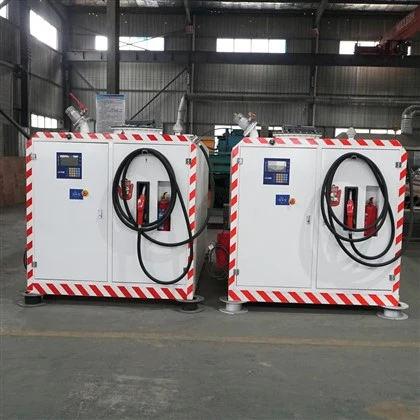
First off—what even is a mobile fuel station here? It’s not some rickety gas can strapped to a pickup. Our units are self-contained: 1,000 to 10,000-gallon UL-listed steel tanks, with leak-proof liners (don’t worry, we test those every time), a smart meter, lockable pumps, and all the safety gear (fire extinguishers, spark-proof wires, even grounding clamps) built right in. They’re not just big tanks—they’re mini, mobile fuel farms. That means moving ‘em isn’t like towing a trailer with a lawnmower; there’s a whole process, and if we skip any step, you might end up with a big mess or worse.
Let’s start with the first big check before we even load it on a truck: pre-transport prep. This is non-negotiable, and I don’t care if it adds 30 minutes to my day. First, we drain all residual fuel? Wait, no—wait, we don’t empty the whole tank, because filling it back up at the site is a hassle. But we do drop the level to 20% max. Full tanks are way too heavy (a 5,000-gallon tank of diesel is like 38,000 lbs alone, more than most semi trucks can handle without a permit). We also hook up the pressure relief valves, double-check that all doors and pump covers are padlocked, and wrap any wires or hoses so they don’t drag or get chewed up by road debris. Last thing: we tag every unit with a QR code that has our transport team’s number and the unit’s serial number—if something goes missing, we can track it fast.
Next up: picking the right truck for the job. This is where people mess up. You can’t just hire the local tow truck guy who moves boats. We use flatbed semi-trucks 90% of the time, and for units under 3,000 gallons, sometimes a heavy-duty pickup with a gooseneck trailer—BUT only if the route is paved. If your jobsite is out in the boondocks, on dirt roads, we bring a lowboy semi, because those have a lower center of gravity and better traction. Also, permit checks—every state and even county has different rules for oversize loads. For example, in Texas, a load over 12 ft wide needs a special permit and an escort vehicle if it’s moving on a state highway after dark. I’ve had clients in Montana whose permit took three extra days because the county road department forgot to sign off on our route—never skip that paperwork. I once tried to rush a job for a wildfire crew out west and got pulled over in Wyoming with an unpermitted load. Cost me $1,200 in fines and a 12-hour delay. Learned my lesson.
Loading time is wild to watch if you haven’t seen it. We use a hydraulic crane that’s rated for at least twice the weight of the unit—overkill, I know, but I’ve seen a crane snap under a 4,000-lb load (turns out the operator miscalculated). The whole process takes about 15 minutes for a small unit, 25 for a big one. We use two chains, not one, to secure the unit to the flatbed—cross-chained, so it doesn’t slide side to side or tip. Then we tie down all the loose parts, like the pump handle and the grounding cable, so they don’t bounce off on the highway. My team’s got a saying: “If you can see it moving, you’re securing it wrong.”
Once the unit’s on the road, the transport team has a whole set of rules. No speeding, obviously, but also no tailgating, and they have to check the chains every 100 miles. A friend of mine had a chain come loose on a unit he was hauling, and the unit slid off the flatbed on a busy highway in Ohio—total wreck, shut down the road for hours, and he lost his license for a year. Also, no stopping near bridges or overpasses that have low clearances—some of our taller units hit 11 ft 6 in, and if you hit an overpass, you’re not just paying for damage, you’re responsible for the delay to traffic. I make my drivers use an app that scans routes for low clearances and weight restrictions before they even leave the shop.
Now, when we get to your spot (that’s the best part of the job, by the way—showing up and seeing how excited you are), the unload is just as careful as the load. We don’t just back up and drop it. We have to make sure the ground is solid—no soft dirt, no mud, because a 10,000-gallon full tank is way too heavy for loose ground. We’ll bring wooden skids or steel plates to put under the unit so it doesn’t sink. Then we use the same hydraulic crane, and since we pre-planned the route to your site, no surprises here. Once it’s set down, we double-check the chains and any loose parts, then hook up the grounding cable to a metal stake in the ground—super important for safety, because static electricity from fuel pumping can cause a spark.
Wait, let’s talk about the stuff that can go wrong, because that’s what no one tells you. Last year, we had a unit going to a construction site in Arizona, and the transport truck hit a pothole on a back road, which made the pressure relief valve pop open a little, and a tiny bit of diesel leaked out. We had to send a team out to clean it up and replace the valve, which cost me a day’s delay for the contractor. So now, we do a full pre-trip inspection of every part of the unit before it leaves, and we use reinforced hoses on the valves. Another time, we moved a unit to a music festival in Oregon, and the festival site was on a hillside—we had to bring extra steel plates and a bigger crane to get it down without tipping. That’s why we always ask clients for exact site details before we quote: road type, site terrain, how much space we have to work with. No detail is too small.
Now, you might be wondering—why not just tow the unit yourself? I get it, maybe you’re a small contractor and want to save a buck. But I’ll be real: most of the time, you can’t. Our mobile fuel stations are classified as oversize/overweight loads in most states, so you need a commercial transport license, not just a regular driver’s license. Also, if you damage the unit during transport, you’re on the hook for repairs, which can be way more than the cost of hiring us to do it. I’ve had a guy try to tow a 3,000-gallon unit to his farm, and he turned too sharp on a country road and flipped the trailer—totaled the tank, and he had to pay for a new one. Don’t be that guy.
And for my clients who are moving units long distance, like from the East Coast to the Gulf Coast, we use specialized transport teams that do cross-country moves, and they have experience with hazardous materials (even though our units are UL-listed and low-risk, we still have to follow hazmat transport rules). We also provide you with a full transport report: all the checkpoints, any stops, any minor incidents, so you know exactly how the unit was handled.
Let me wrap this up, because I know you’re probably looking to get one of these for your next job. Here’s the big takeaway: moving a mobile fuel station isn’t just hauling a box. It’s prepping the unit right, getting the right truck and permits, securing it properly, and being careful every step of the way. Skip that, and you’re looking at delays, fines, or even accidents.

If you’re ready to get your own mobile fuel station, or you have more questions about transport (like how fast we can get one to your jobsite, or what routes we cover), just reach out to my team to chat. We can walk you through every step, no fine print, no confusing jargon. I’ve been doing this long enough to know that transparency about how we get the unit to you is half the battle.
Self-contained Fuel Station References:
- National Fire Protection Association. (2020). NFPA 30: Flammable and Combustible Liquids Code. Quincy, MA: National Fire Protection Association.
- American Petroleum Institute. (2019). API RP 12R2: Recommended Practice for the Design, Construction, Operation, and Maintenance of Portable and Mobile On-Site Fueling Systems. Washington, DC: American Petroleum Institute.
- U.S. Department of Transportation. (2022). Federal Motor Carrier Safety Administration: Oversize/Overweight Load Regulations. Washington, DC: U.S. Government Publishing Office.
Shandong Jingcai Industry and Trade Co., Ltd.
As one of the most professional mobile fuel station manufacturers and suppliers in China, we also support customized service. With abundant experience, we warmly welcome you to wholesale high quality mobile fuel station in stock here from our factory. Contact us for free sample.
Address: Caojiazhuang Village Industrial Park, Lingcheng Town, Qufu City, Jining City, Shandong Province.
E-mail: shandongjingcai888@gmail.com
WebSite: https://www.sdjingcaicn.com/
