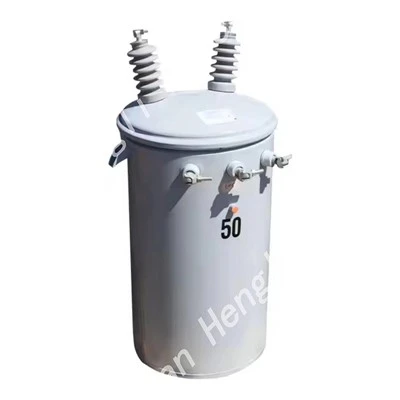
If you’ve ever stood beneath a weathered single-phase pole mounted transformer in a residential neighborhood, watching it hum along quietly powering streetlights, a local café, and a handful of nearby homes, you might not think much about what keeps it running year after year. But as a transformer supplier who’s spent the last 12 years building, troubleshooting, and replacing these workhorses, I can tell you that proper ventilation isn’t just a small detail—it’s the difference between a transformer that lasts 20+ years and one that craps out in 5. Single Phase Pole Mounted Transformer
I’ve seen it all: transformers rusting from trapped moisture, windings burning up because they overheated in a summer heatwave, and even a few that shorted out because condensation built up from stagnant air. The worst part? Most of these issues are completely avoidable if you get the ventilation right from the start, and maintain it regularly. Let’s break this down into actionable, real-world steps that I’ve tested on every single unit we ship, no fancy engineering degree required.
First, let’s get on the same page: what is proper ventilation for a dry-type single-phase pole mounted transformer? Unlike liquid-filled transformers that use oil for cooling and insulation, dry-type units rely on air circulating around their core and windings to carry away heat. That means two things: air needs to flow through the unit, and that air needs to be clean and dry, not full of pollen, dust, or moisture. For single-phase pole mounted models, which are smaller, often lower-capacity (think 5kVA to 50kVA) and mounted 10 to 15 feet above the ground on a wooden or concrete pole, their ventilation system is a lot more compact than substation-sized units—but equally critical.
The biggest mistake I see customers make is buying a transformer that’s just big enough for their load, and then shoving it in a tiny metal enclosure with no airflow. Wait—yes, I said enclosure. A lot of residential and small commercial applications don’t leave the transformer exposed to the open air. They put it in a NEMA 3R or NEMA 4X enclosure to protect it from rain, snow, and debris. But if that enclosure isn’t ventilated, it becomes a sauna in summer and a cold trap in winter, and that’s a death sentence for a dry-type unit.
Let’s start with the basics: choosing the right location on the pole. When we design a unit for a customer, the first thing we talk about is where it’s going to sit on the pole. Rule number one: don’t mount it in a recessed part of the pole where it’s shaded most of the day, or where it’s blocked by tree branches, utility lines, or even neighboring transformers. I once had a customer who mounted his new transformer right next to a 100kVA three-phase unit, and the airflow got trapped between the two. After two summers, his single-phase unit’s winding temperature was 35 degrees above the design limit. That’s a 20% reduction in lifespan, easy. We had to reposition it, and we added extra ventilation to the enclosure, and it’s been running strong for 7 years now.
Another location tip: keep it at least 2 feet away from any vertical obstructions, and 3 feet away from horizontal obstructions like roof overhangs or porch roofs. The goal is to get crossflow air moving around the transformer. If wind can’t reach it, natural convection (the air heating up and rising out of the unit) won’t work either. That same principle applies to under-pole mounts—wait, some customers put transformers too low, near the ground, where grass clippings, dirt, and standing water can get pulled into the airflow. Always mount the bottom of the enclosure at least 1 foot above the maximum snow line, and 18 inches above the ground minimum. I don’t care how flat your yard is; summer thunderstorms can cause flash flooding, and a transformer sitting in even an inch of water is at risk for insulation damage.
Next, matching the enclosure to ventilation needs. Not all enclosures are created equal, and choosing the wrong one is the single biggest cause of ventilation issues in dry-type single-phase pole transformers. NEMA 3R is the standard for outdoor use, and it has limited ventilation slots designed to keep out rain and debris. But for areas with high average temperatures—like the southern US, parts of the Middle East, or even areas with long, hot summer stretches in the northern US—NEMA 3R might not cut it. We recommend switching to a NEMA 12 or NEMA 4X enclosure with more, properly sized ventilation louvers.
What’s the right louver size and placement? I get this question all the time, and it’s not rocket science. For a 15kVA to 30kVA single-phase unit, you need a total open area of at least 1.5 square feet for ventilation. That’s split evenly between the bottom intake louvers and the top exhaust louvers. Why? Hot air rises, so you need intake at the bottom (fresh, cooler air coming in) and exhaust at the top (hot air going out). If you put all the louvers at the bottom, the hot air just gets trapped inside. If you put them all at the top, no fresh air gets in.
And those louvers need to be angled correctly. Intake louvers should face downward, at a 45-degree angle, so rain can’t blow straight into the enclosure. Exhaust louvers should face upward, or at a 30-degree angle away from the top, so hot air doesn’t get pulled back into the transformer. I’ve seen customers cut louvers straight into the side of an enclosure, and when a rainstorm hits, water pools inside. One trick we use at our facility is adding a small mesh screen over both intake and exhaust louvers to keep out bugs, pollen, and small debris. But make sure the screen is corrosion-resistant—aluminum screen will rust in coastal areas, so go with stainless steel or plastic-coated nylon. That screen adds a tiny bit of airflow resistance, but it’s worth it to keep bugs from building a nest in your transformer’s windings.
Now, what if you don’t use an enclosure at all? Some customers prefer exposed transformers for better airflow, especially in mild climates. But exposed units have their own ventilation risks: they get covered in dust, pollen, and even bird droppings, which can block the cooling fins (the metal plates around the core that carry heat away). We’ve had to clean out exposed transformers that were installed near a farm, where dust and crop debris built up to the point that airflow was cut by 40%. If you go the exposed route, make sure you do an annual visual check of the cooling fins, and use a soft brush or low-pressure air to clean them once a year. Never use a pressure washer—you can damage the insulation on the windings.
Another big one for dry-type transformers: managing moisture. Even with great airflow, transformers can still get condensation, especially in areas with high humidity or big temperature swings (like cold nights following hot days). Condensation is a killer because it lowers insulation resistance and can cause short circuits. How do you prevent that? We add a small, breathable desiccant bag inside every enclosure we ship, and we make sure the ventilation system isn’t so tight that it traps air. Wait—breathable is the key word. The desiccant absorbs excess moisture, but it also lets air circulate, so you don’t get a pressure buildup or stagnant air. For extra protection in coastal areas or places with heavy fog, we also recommend a dehumidifier module that plugs into the pole’s nearby power source. It’s small, energy-efficient, and keeps the air inside the enclosure dry year-round.
Load management is also tied directly to ventilation, and it’s something most customers don’t connect. A transformer running at full load is going to generate more heat than one running at 50% load. If you size your transformer perfectly for your peak load, you’re going to run hotter, especially in hot weather. We always recommend sizing a single-phase pole transformer at 125% of your maximum continuous load. That extra 25% capacity means the transformer isn’t working as hard, so it generates less heat, and it’s easier for the ventilation system to keep it cool. I had a customer a few years ago who tried to save money by buying a transformer that was exactly the size he needed for his summer peak load (a pool pump, AC unit, and a few outlets). By August, the transformer was running at 110 degrees Celsius, and we got a call saying it was making a strange hum. We sent a tech out, who checked the ventilation and confirmed it was working, but the load was too high. We swapped it for a unit 25% bigger, and his operating temperature dropped to 75 degrees, where it should be. No more issues.
Regular maintenance is non-negotiable, and it’s a lot simpler than you might think. Most people only think about maintenance when something breaks, but a 10-minute check every 6 months can save you thousands in repairs or replacement. Here’s our go-to maintenance checklist for ventilation: First, inspect all louvers. Make sure none are blocked by debris, rusted shut, or damaged. Clear any leaves, twigs, or dirt from the intake and exhaust slots. Second, check the mesh screens. If they’re clogged with pollen or bugs, take them off and rinse them with water, then let them dry before putting them back. Third, check the cooling fins on exposed units. Brush off any dust or debris with a soft nylon brush—don’t use metal brushes, they can scratch the fins. Fourth, test the desiccant bag. If it’s hard and caked, it’s absorbed all the moisture it can, so replace it. For units with dehumidifiers, check the outlet regularly to make sure it’s working, and replace the filter every year.
Wait, what about extreme conditions? Let’s talk about places with super cold winters, or super hot summers, or high winds. In areas with temperatures below freezing, the last thing you want is moisture trapped inside the enclosure freezing and cracking insulation. Our solution there is to add a small, low-power space heater that activates when the temperature drops below 32 degrees. It uses barely any power, runs only when it’s cold, and keeps the internal temperature above freezing, so no condensation or ice buildup. For areas with consistent temperatures over 95 degrees, we recommend adding extra exhaust louvers and a small variable-speed fan. The fan kicks on automatically when the transformer’s winding temperature hits 80 degrees, and turns off when it cools down. That gives extra airflow when it’s needed, without wasting energy when it’s not. We’ve tested these fans in Phoenix and Houston, and they’ve cut operating temperatures by 10 to 15 degrees, which extends lifespan by at least 5 years.
I know a lot of homeowners and small business owners think of transformers as set-it-and-forget-it equipment, but that’s not the case. I’ve been in this business long enough to know that the units that last the longest are the ones where ventilation was planned for from day one, not an afterthought. I’ve seen transformers in use for 30 years, still running strong, because their owners took the time to get the location right, pick the right enclosure, and do regular maintenance. On the flip side, I’ve replaced transformers that were only 5 years old because someone cut corners on ventilation, saved $100 on a cheaper enclosure, and didn’t check it after a storm.
At the end of the day, proper ventilation for a dry-type single-phase pole mounted transformer is about balance: enough airflow to carry away heat, enough protection to keep out the elements, and regular care to make sure nothing gets in the way. If you’re in the market for a new unit, or you’re having issues with your current one overheating or failing, I’m here to help. We build every transformer with ventilation designed specifically for the conditions it’s going to be in, and our team can walk you through sizing, location, and maintenance to make sure your unit runs for decades. Don’t wait until your transformer fails—reach out to us to talk through your needs, and we’ll make sure you get the right setup that keeps your power flowing reliably, no matter the season.
Special Transformer References
ANSI/IEEE C57.12.00, Standard for General Requirements for Liquid-Immersed Distribution, Power, and Regulating Transformers
NEMA Standards Publication 250, Enclosures for Electrical Equipment
Department of Energy Energy Efficiency and Renewable Energy, "Transformer Ventilation and Cooling Best Practices"
IEEE Transactions on Power Delivery, "Ventilation Design Considerations for Dry-Type Distribution Transformers"
Zhejiang Jiangshan Hengli Electrical Co., Ltd.
Zhejiang Jiangshan Hengli Electrical Co., Ltd. is one of the most professional single phase pole mounted transformer manufacturers and suppliers in China, featured by quality products and low price. Please rest assured to wholesale cheap single phase pole mounted transformer in stock here and get pricelist from our factory. Customized orders are welcome.
Address: 212 Fuzhu Street Sidu Town, Jiangshan, Zhejiang, China
E-mail: henglijs@foxmail.com
WebSite: https://www.henlypower.com/
