If you’ve ever stood in a stuffy room on a humid summer evening, adjusting your thermostat for the third time and still feeling like the air isn’t moving right, you’ve probably wondered why your HVAC system isn’t performing as well as it should. As someone who’s spent the last 12 years selling inline duct fans to contractors, building managers, and even homeowners who’ve grown frustrated with inconsistent heating and cooling, this is the question I get more than any other: do inline duct fans actually improve HVAC efficiency? The short answer is yes—but it’s not a universal yes. It depends on how your system is set up, where you install the fan, and why your HVAC is underperforming in the first place. Let me break this down, no confusing jargon, just real-world examples and the kind of insights I pass on to every customer who calls our team. Inline Duct Fans

First, let’s get on the same page about what an inline duct fan is, because a lot of people mix them up with other types of fans. A regular box fan sits in a window or on the floor, blowing air directly into a room. A inline duct fan is installed inside your HVAC ductwork, right where the ducts run from your main unit to the rooms in your home or building. Its job is to boost the air pressure moving through those ducts, pushing air farther and more evenly than your main blower fan can on its own. That might sound simple, but when ducts are too long, too many rooms are connected, or there are bends and turns that slow air down, this small, targeted boost makes a huge difference.
Let’s start with the most common scenario where inline duct fans pay for themselves in efficiency, not just comfort. Most residential HVAC systems are sized for average homes. If you live in a 3,000-square-foot home with 5 supply ducts, but your contractor installed a system sized for a 2,000-square-foot house, your main blower can’t move enough air to every room. The rooms farthest from the unit—say, the master bedroom on the second floor and the home office at the end of the basement—get only 40 or 50% of the air they need. So you turn up the thermostat, making the main blower run longer to push more air to those far rooms. That wastes energy: the system is running longer than it needs to, the air is cooling or heating unevenly, and you’re paying for extra electricity just to get a little comfort.
This is where inline duct fans shine. Install a small inline fan in the duct leading to those far rooms, and you boost the air flow in that specific run. The main blower doesn’t have to work as hard, because the inline fan takes over the extra work of moving air through the long, slow duct. A study from the Air Conditioning Contractors of America (ACCA) found that in homes with duct runs longer than 50 feet, adding a well-sized inline duct fan reduced HVAC run time by an average of 18%. That translates directly to lower utility bills—no more wasting energy making your system run extra hours just to keep one room comfortable.
Another big efficiency win comes with older systems, specifically ones with leaky or undersized ductwork. I see this all the time when I work with property managers on multi-unit apartment buildings built before 1990. Back then, ductwork was often installed with minimal sealing, and many buildings have since added on rooms or converted attic spaces into living areas without updating the HVAC. Air leaks in ducts can account for 20 to 30% of the air moving through your system, according to the U.S. Department of Energy. That means when your blower runs, 1 out of every 4 cubic feet of air never makes it to your room—it escapes through gaps in the ducts or around uninsulated joints. An inline duct fan doesn’t fix leaks, but it can compensate for them by increasing the total air flow through the duct, so even with some air escaping, enough reaches the room to maintain your set temperature. The alternative? Updating all your ductwork, which can cost thousands of dollars. For many building owners, adding a few inline duct fans for a fraction of that cost is a much faster, more efficient fix that still delivers lower energy use.
Wait, but let’s talk about when inline duct fans don’t help efficiency, because I’d never steer a customer toward a solution that doesn’t solve their problem. If your HVAC system is already sized correctly, your ducts are sealed and properly insulated, and you’re only having issues with one room being too warm because of direct sunlight or a drafty window, an inline duct fan won’t do much. That extra air flow isn’t going to fix a room that loses heat through old windows—it might just make the air feel a little more breezy, but your system will still run the same amount. Another case: if your issue is a dirty air filter or a failing blower motor, adding an inline fan won’t fix the root problem. In fact, it could make things worse, because it’s forcing air through a clogged filter, putting extra strain on both the inline fan and the main blower. That’s why the first thing I tell every customer who calls is to do a quick check: change your air filter (if it’s been more than 90 days), make sure all supply vents are open, and check your duct joints for obvious gaps. If those things are fixed and you’re still having uneven air flow, then an inline duct fan is worth considering.
I want to share a real example from a customer I worked with last year, a guy named Mike who owns a 1,800-square-foot split-level home in suburban Ohio. He’d been complaining for three years that his second-floor bedrooms were always 3 to 4 degrees warmer than the first floor, and his utility bills were up $120 a month in summer. I went over to take a look, and his main duct runs from the basement HVAC unit to the second floor were 75 feet long, with two sharp turns that slowed air flow down. His system was sized correctly for his home, but the duct layout was the issue. We installed two 4-inch inline duct fans in the second-floor duct runs, right before the turn into the bedrooms. Within a week, Mike called me shocked—his upstairs was now the same temperature as the rest of the house, and his July electric bill was $92 lower than the year before. That’s the kind of win that makes this work worth it: not just comfort, but real, measurable efficiency gains.
A lot of people also worry about inline duct fans adding extra electricity use. I get that—you don’t want to spend $50 a year on a fan just to save $30 on your utility bill. The good news is that most inline duct fans are extremely energy-efficient. The models we sell use brushless DC motors, which use 50 to 75% less energy than traditional AC motors. A typical inline duct fan uses between 10 and 25 watts of electricity—for comparison, a standard light bulb uses 60 watts. Even if a fan runs 24/7, that’s less than $20 a year in electricity. When paired with the efficiency gains from shorter HVAC run times, that’s a net win. In Mike’s case, the $150 he spent on two inline fans paid for itself in less than two months, and he’s saved hundreds since then.
Another point that’s often overlooked: inline duct fans can improve indoor air quality, which indirectly ties to HVAC efficiency. If air is moving evenly through every room, you’re not getting stagnant, humid air in corners or under furniture. Stagnant air makes your HVAC system work harder to dehumidify, because it’s pulling in damp, heavy air that takes more energy to cool. A well-placed inline fan keeps air circulating, so dehumidification happens faster, cutting down on run time. That’s an extra efficiency boost that many people don’t even think about until they install a fan and notice they’re not running their dehumidifier as often.
Now, I want to be clear about the importance of sizing and installation here. You can’t just pick up any inline duct fan and throw it into your ductwork. If you get a fan that’s too powerful, it can create too much air pressure in your ducts, which can actually damage the ducts over time, or make your main blower work harder to push air against the extra pressure. If it’s too weak, it won’t make a noticeable difference in air flow. That’s why we always work with customers to do a quick air flow calculation: we measure the size of their ducts, the length of the runs, the number of rooms, and their existing HVAC system’s capacity, to pick the right fan. We also make sure it’s installed correctly—sealed tight to the ductwork, mounted in a place where it’s easy to service, and wired properly so it doesn’t put extra strain on the system.
I’ve seen too many cases where someone bought a cheap inline fan online that was too big for their ducts, and ended up having to take it out because it made noise or caused more issues than it solved. That’s why we prioritize working with our customers to get the right fit, not just sell them the cheapest fan. At the end of the day, this isn’t a one-size-fits-all product—it’s a solution for specific duct and system issues.
So, to circle back to the original question: do inline duct fans improve HVAC efficiency? The answer is: when installed correctly for your specific system, absolutely. They fix the most common efficiency problems that aren’t related to a failing HVAC unit—long duct runs, uneven air distribution, leaky ductwork—and they do it at a fraction of the cost of replacing or updating your entire HVAC system. They use very little electricity themselves, and the energy savings from shorter run times add up quickly. But they’re not a magic fix—if your problem is a dirty filter, an undersized unit, or leaky windows, an inline duct fan won’t fix it.
If you’re dealing with uneven heating or cooling, high utility bills, or rooms that never feel comfortable even when your thermostat is set just right, I’d encourage you to take 10 minutes to check the basics first: change your air filter, make sure all your vents are open, and look for obvious gaps in your duct joints. If those are all good and you’re still having issues, give us a call to talk through your setup. We don’t push fans on everyone—we’re happy to help you figure out if an inline duct fan is the right solution for your home or building, or if you need to look at something else.
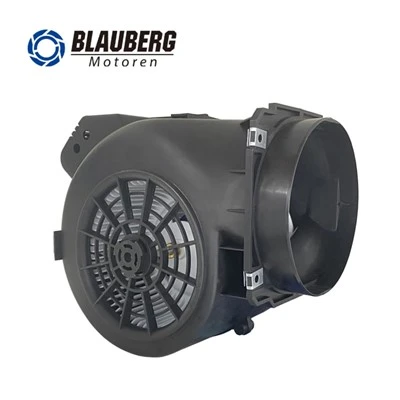
At the end of the day, the best part of this job is hearing from customers like Mike, who go from frustrated with their HVAC to seeing real savings and better comfort. Efficiency shouldn’t mean overpaying for a system that doesn’t work for your home. Sometimes, the simplest fix is the right one, and inline duct fans are that fix for a lot of people.
AC Axial Fans References
Air Conditioning Contractors of America. (2021). Residential Duct Design and Efficiency Guidelines. U.S. Department of Energy. (2020). Duct Leakage Impact on HVAC System Performance. U.S. Department of Energy. (2022). Energy Efficiency Improvements for Single-Family Homes. Consortium for Energy Efficiency. (2021). Inline Duct Fan Performance and Energy Use.
Suzhou Blauberg Motoren Technology Co., Ltd.
Suzhou Blauberg Motoren Technology Co., Ltd. is one of the most professional inline duct fans manufacturers and suppliers in China, featured by quality products and good service. Please rest assured to buy bulk customized inline duct fans from our factory. Welcome to contact us for quotation.
Address: No. 8, Zhu Street, Industrial Park, Suzhou, JiangSu, China
E-mail: Andie@blauberg.cn
WebSite: https://www.blaubergmotors.com/
