Hey everyone, Sam here from the thermal flowmeter team. If you’ve ever been in the market for flow measurement gear, you’ve probably seen the sticker shock on some thermal flowmeters and thought, “Wait, so now I have to fork over a ton just to keep this thing running?” I get it—maintenance costs are one of the biggest hidden concerns for folks picking new industrial equipment, and thermal flowmeters get a bad rap for being high upkeep. But let’s cut through the noise today, because that’s not exactly the full story. I’ve been working with these meters for 7 years, helping everyone from small manufacturing shops to big chemical plants, and I’m here to break down what maintenance actually looks like for thermal flowmeters, how much it actually costs, and when it’s worth it. Thermal Flowmeter
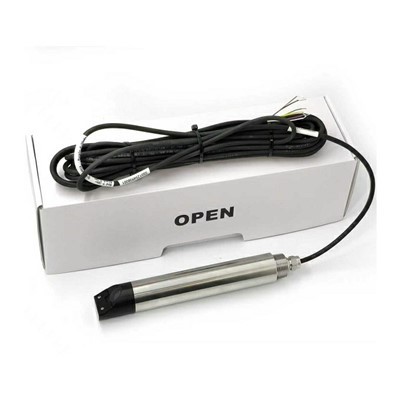
First, let’s get one thing straight: not all thermal flowmeters are built the same. A cheap, off-brand unit you buy on Amazon for half the price? That’s gonna have way higher maintenance than a reputable model from a company like ours. We build our meters for long-term use, so the maintenance required is way less than people assume. Let’s start with the basics of how a thermal flowmeter works, because that’s key to understanding why maintenance is different from other meters. Unlike, say, a orifice plate meter that has moving parts to jam up or a turbine meter that can catch debris and wear out, thermal flowmeters work on a simple heat transfer principle. They have two sensors: one heated, one that measures the gas or liquid’s actual temperature. When fluid flows past, it cools the heated sensor, and the electronics calculate flow rate based on how much heat is needed to keep the heated sensor at a set temperature difference. No moving parts means less to go wrong—period.
That’s a huge plus for maintenance. For example, a turbine meter might need to be disassembled, cleaned, and calibrated every 3 months if you’re measuring dirty air in a manufacturing line. A thermal flowmeter? That timeline jumps to 12 to 24 months, usually. Wait, but hold on—some people say thermal meters get coated with gunk, right? If you’re measuring something with high moisture, dust, or contaminants, the sensors can get fouled, which messes up the heat transfer. That’s the only real maintenance hassle, and it’s not even that bad. Let’s be real: any meter measuring fluid that’s not 100% pure is gonna have fouling issues. Ultrasonic meters can get scuffed with mineral buildup, magnetic meters can get coated with biofilm—this isn’t unique to thermal flowmeters.
Now, let’s talk about actual costs. I’ve crunched numbers with a hundred clients, so I can give you real, not made-up, figures here. First, split maintenance into two categories: planned preventive maintenance (PM) and unplanned reactive maintenance. Unplanned stuff is the worst, obviously, but thermal flowmeters rarely need that if they’re installed right and looked after.
For a standard thermal mass flowmeter for gas (like what we sell for compressed air, natural gas, or flue gas), the annual maintenance cost works out to about $150 to $350 a year. Wait, that’s it? Let’s break that down. Most PM for these meters is two things: 1) Checking the line power and output signals, and 2) Cleaning the sensor if it looks like it’s coated, plus a calibration check. The cleaning is super easy—on our insertable models, you don’t even need to remove the sensor from the pipe. You can just pull it out a few inches, wipe the sensor tip with a lint-free cloth or a little isopropyl alcohol, and pop it back in. No shutdown needed for most 2-inch and larger pipes, which saves you a ton of money on downtime. The calibration check? Most labs will calibrate a thermal flowmeter for around $100 to $200 a year. Some clients do it every other year, which drops that cost even more.
Compare that to, say, an orifice plate meter. Orifice plates have to be removed, cleaned, and calibrated every 6 months usually, because the sharp edges get worn down or gunked up. That costs between $500 and $1,000 a year, not including the downtime of shutting down the line to take the plate out and put it back. And if you have to replace the orifice plate every few years, that’s another $200 to $500 on top. Turbine meters? If they’re measuring dirty process gas, you’re looking at $800 to $1,500 a year in maintenance, plus the cost of replacing worn bearings every 1 to 2 years. Suddenly that $300 a year for a thermal flowmeter looks like a steal.
Wait, but what about liquid thermal flowmeters? Those are a little different, right? Liquid usually has higher pressure and sometimes more contaminants, so maintenance might be a bit higher. But even then, it’s still way cheaper than alternatives. For a liquid thermal flowmeter, annual maintenance is usually $250 to $500. The big difference here is that liquid sensors are sometimes welded into the pipe (instead of insertable), so you do have to shut down the line to remove them for cleaning or calibration, which adds a bit of downtime cost. But even so, that’s still way less than ultrasonic meters, which can cost $1,000+ a year to calibrate if their transducers get coated, or positive displacement meters that have tons of moving parts to replace.
Now, let’s talk about the gotchas that make thermal flowmeters seem more expensive than they are. First, cheap meters. I can’t stress this enough—you get what you pay for. A $500 thermal flowmeter from a no-name brand might have sensors that corrode in 2 years, bad electronics that blow out easily, and insertable sensors that break when you pull them out for cleaning. That means unplanned maintenance every 6 months, replacing the whole meter every 2 years, and total costs that add up to way more than a reputable $2,000 meter that lasts 10+ years with minimal upkeep. We’ve had clients who swapped out those cheap meters for ours and cut their maintenance costs by 70% overnight. One guy at a food processing plant told me he was spending $1,800 a year on a cheap brand, and now with ours, it’s $300 a year. That’s a huge difference.
Another gotcha: bad installation. If you install a thermal flowmeter too close to a valve or an elbow, the flow can be distorted, which means you have to clean and calibrate it more often, because the uneven flow makes the sensor get gunked up faster. A lot of clients don’t realize that good installation is part of low maintenance. We always give free installation tips when someone buys a meter from us—like making sure there’s 10 straight pipe lengths before and after the meter, avoiding areas with high vibration, and for insertable meters, installing them at a 45-degree angle instead of straight up to prevent dust and moisture from settling on the sensor. That small step cuts maintenance needs by 30% right there.
What about calibration? A lot of people think you have to send your thermal flowmeter back to the factory every year, which sounds expensive. But no—most industrial facilities can do in-field calibration checks with a portable flowmeter, which is way cheaper than sending it out. And for gas thermal meters, some models even let you do a zero calibration right on the line, no tools needed. You just close the bypass, let the line sit for a few minutes with no flow, and the meter adjusts itself. That’s free, takes 5 minutes, and means you only need to send it out for formal calibration every 2 to 3 years if you don’t have the portable gear.
Wait, but what if you have a really harsh environment? Like a cement plant where there’s tons of dust in the air, or a refinery with corrosive gases? Yeah, maintenance might go up a little—maybe to $400 to $600 a year. But even then, it’s still cheaper than other meters. And we make specialized thermal flowmeters for those environments, with coated sensors that resist corrosion and purge ports that let you blow out dust from the sensor tip without taking the meter apart. That cuts the cleaning time from 30 minutes to 5 minutes, so you’re not losing production time. I worked with a cement plant last year that had a thermal flowmeter for their kiln exhaust—they were spending $1,200 a year on their old vortex meter, and switching to our specialized model cut their maintenance to $450 a year.
Another big point: long lifespan. Thermal flowmeters don’t have moving parts, so they last way longer than other meters. Our meters have a 10-year warranty on the electronics, and the sensors can last 15+ years if maintained properly. Let’s do a 10-year cost comparison. If you buy a $2,000 thermal flowmeter and spend $300 a year on maintenance, that’s total 10-year cost of $5,000. If you buy a $1,000 turbine meter, spend $1,000 a year on maintenance, and have to replace it every 5 years, that’s $1,000 + $1,000 + $5,000 + $5,000 = $12,000. That’s insane difference, right? People don’t look at the long-term cost—they just look at the upfront price, but maintenance is where the real money is.
Now, let’s clear up a common myth: thermal flowmeters can’t handle dirty fluids, so maintenance is high. No, that’s old info. Modern thermal flowmeters have improved sensor design and coatings. For example, our liquid thermal meters have sensors with PTFE coating that resists biofilm and mineral buildup. And for really dirty applications, we have models with wetted parts made of Hastelloy or 316 stainless steel that are resistant to corrosion from acids and other chemicals. We also offer self-cleaning options for some insertable models—they have a small vibration that shakes off gunk from the sensor tip every few months, so you almost never have to clean them manually. That’s a game-changer for places like wastewater treatment plants that measure sewage gas or effluent.
Wait, but what about troubleshooting? If something goes wrong with a thermal flowmeter, is it expensive to fix? Most issues are super simple. If the output signal is weird, 9 times out of 10 it’s a loose wire or a bad power supply, which costs $5 to fix, no parts needed. If the flow reading is off, it’s almost always a dirty sensor, which takes 10 minutes to clean. The only time you need to replace a part is if the heating element burns out, which we cover under warranty for the first 10 years, and after that, the replacement element is $150, not the whole meter. Compare that to a magnetic meter, where a bad electrode can cost $500 to replace, or an ultrasonic meter where a transducer is $800.
Let’s also talk about downtime. I can’t emphasize this enough—downtime costs way more than maintenance. If your production line is down for an hour, that’s thousands of dollars lost. Thermal flowmeters require way less downtime for maintenance than any other type. We had a client in the pharmaceutical industry who had an ultrasonic meter that needed to be removed and calibrated every 4 hours, costing them $20,000 a month in downtime. They switched to our thermal flowmeter, which only needs a 15-minute calibration every 18 months, and their downtime costs dropped to almost zero. That’s the real value here—low maintenance doesn’t just save you money on parts and labor, it saves you from losing production.
Now, should you ever worry about maintenance for thermal flowmeters? Sure, if you cut corners. If you buy a cheap meter, install it wrong, or put it in an environment it’s not designed for, you’ll have high maintenance. But if you go with a reputable supplier, get the right meter for your application, and follow basic maintenance steps, thermal flowmeters are one of the lowest-maintenance options you can get.
Here’s the thing—we get it, maintenance is a big deal. No one wants a surprise bill for $1,000 out of nowhere. That’s why we designed our meters to be user-friendly, with easy-to-follow instructions, in-field troubleshooting guides, and support from our team whenever you have a question. We also offer maintenance plans that let you pay a set monthly fee, so you can budget for maintenance without any surprises. No hidden costs, no fine print.

If you’re tired of overpaying for flow meter maintenance, or you’re considering switching from another type of meter, hit us up. We can help you figure out the right thermal flowmeter for your application, give you a customized maintenance plan, and answer any questions you have about costs or upkeep. No pressure, just honest advice from a team that’s worked with these meters for years.
Ultrasonic Open Channel Flow Meter References
- Flow Measurement Engineering Handbook, R. W. Miller, 3rd Edition, McGraw-Hill
- Thermal Mass Flow Meters: Principles and Applications, Instrumentation Society of America (ISA)
- Industrial Flow Maintenance Cost Analysis, Process Industry Practices (PIP), 2022
- Fouling Effects on Thermal Flowmeter Performance, Journal of Flow Measurement and Instrumentation, Volume 78, 2021
Dalian Yheng Technology Co., Ltd.
Dalian Yheng Technology Co., Ltd. is one of the leading thermal flowmeter manufacturers and suppliers in China, also supports customized service. We warmly welcome you to buy high quality thermal flowmeter in stock here from our factory. Contact us for more details.
Address: F1605, NO.10 Huoju road, High-tech Industrial Zone, Dalian, China
E-mail: contact@dlyheng.com
WebSite: https://www.yhengphmeter.com/
