If you’ve been in the extrusion machinery game for more than a few years, you know that a PMMA PC pipe making machine that was cutting it three years ago is probably holding you back today. I’ve seen it firsthand: clients reach out saying their production line is slow, pipe consistency is off, or they’re wasting too much raw material because their old machine can’t keep up with modern quality standards. As a supplier who’s installed and upgraded over 120 PMMA PC pipe lines in the last decade, I don’t just sell new equipment—I know how to get more life and better performance out of the machines you already own. Let’s walk through the upgrades that actually move the needle, no fluff, just what’s worked for our clients time and time again. PMMA PC Pipe Making Machine

First, let’s get one thing straight: upgrading doesn’t mean scrapping your whole machine. Most PMMA PC pipe lines have a solid core—extruder barrel, gearbox, even the main drive— that can last 15+ years with the right tweaks. The upgrades that deliver the biggest ROI are usually the ones that target bottlenecks: places where your line slows down, creates defective parts, or wastes material. Let’s start with the most impactful upgrade for extrusion output: the screw and barrel.
Old PMMA PC pipe machines often come with a general-purpose screw, designed to handle multiple plastics without much thought. But PC and PMMA are temperamental thermoplastics—PC is prone to shear degradation (it breaks down when overworked with friction heat), and PMMA can suffer from melt inconsistency if the screw doesn’t mix it evenly. A general-purpose screw might get the job done, but it limits your output by 10-20% and creates more scrap. For example, we had a client in automotive lighting parts who was running 6-inch PC pipes with a 20-year-old general-purpose screw at 120 kg/hour. After we swapped it for a barrier screw specifically calibrated for PC/PMMA, they jumped to 150 kg/hour—without any increase in energy use, and their scrap rate dropped from 7% to 2%. The barrier design separates the molten polymer from the solids, so you get more uniform melting, less shear, and less time the plastic sits hot in the barrel degrading. I always recommend matching the screw’s flight depth and compression ratio to your specific pipe size and material grade. A 2-inch micro-PC pipe needs a much different screw than a 12-inch PMMA water pipe, and cutting corners here just leads to headaches down the line.
Next, if your line was installed before 2018, your heating and cooling system is probably the next big upgrade. Old heaters are often inefficient—they turn on and off sharply, creating hot spots in the barrel that burn PMMA and yellow PC, or leave cold spots where the plastic doesn’t melt all the way. We see this all the time: clients running their heaters 24/7, paying more in energy than they need, with pipes that have inconsistent wall thickness or bubbles from unmolten pellets. Swapping your old band heaters for ceramic band heaters with closed-loop temperature control cuts energy use by 15-20% immediately, and keeps barrel temperatures within ±1°C—way more precise than the ±5°C you get with old analog controls. On the cooling side, most old calibration tanks use a fixed flow rate for all pipe sizes. If you’re running a small micro-pipe one day and a large industrial PMMA pipe the next, you’re either wasting water (and energy for water chillers) or not cooling the pipe fast enough, leading to warping. A variable-speed circulation pump and segmented calibration tank lets you adjust flow rate and temperature per pipe diameter. For a client in medical tubing, this upgrade fixed their warping issue entirely; they used to have to trim 3mm off every pipe end, now they trim less than 0.5mm, saving over $12,000 a year in material.
Then there’s the extrusion control system, and this is where most underinvested lines get left behind. Old control systems rely on analog dials and basic PLCs that only track speed and temperature, not what’s actually happening inside the process. If your machine has a 10-year-old control panel, you’re probably manually adjusting speed, temperature, and puller rate every time you switch pipe sizes—a process that takes 30 minutes and usually leads to bad parts during the changeover. A modern digital PLC with a human-machine interface (HMI) lets you save recipes for every pipe size and material grade. When you switch from a 4-inch PMMA pipe for irrigation to a 6-inch PC pipe for electrical conduits, you just select the recipe, and the machine automatically adjusts all parameters. That cuts changeover time from 30 minutes to 5, and eliminates most of the defective parts made during swaps. Even better, modern control systems can monitor real-time data: melt pressure, motor load, line speed, and even pipe diameter. If melt pressure spikes because of a partially clogged screen changer, the HMI will alert you before it causes a break in the line. I had a client in the signage industry who runs 8-hour shifts, 5 days a week. Before upgrading their control system, they had 2-3 unplanned stops a month from screen clogs or temperature fluctuations. After the upgrade, they only have 0.5 stops a month, which added up to over 200 extra production hours a year—enough to run an extra 10,000 feet of 10-inch PMMA sign pipes.
Now, let’s talk about the calibration and haul-off system, which is where dimensional consistency is made or broken. For PMMA and PC pipes, dimensional accuracy isn’t just about quality—it’s about customer satisfaction and compliance with industry standards. Old vacuum calibration tanks often have uneven vacuum pressure, so the pipe is slightly oval or has inconsistent wall thickness. If your puller has fixed grip pressure, it can scratch soft molten PC or pull unevenly, leading to stretch and dimensional errors. The upgrade here starts with a multi-zone vacuum calibration tank, which lets you adjust vacuum pressure along the length of the tank to keep the pipe perfectly round as it cools. Add in a variable-speed, servo-driven haul-off, instead of an old mechanical puller, and you get much more precise line speed. Servo haul-offs adjust speed in milliseconds if there’s a slight change in extrusion output, so the pipe’s wall thickness stays within ±0.1mm, instead of ±0.5mm like many older lines. I worked with a client in plumbing supplies who had been rejecting 12% of their PMMA pipes because of dimensional errors that failed industry pressure tests. After upgrading their calibration and haul-off, their rejection rate dropped to 0.8%, and they were able to win two new big contracts with housing developers that required stricter dimensional specs.
One often-overlooked upgrade for PC pipes, specifically, is the screen changer. Old manual screen changers require you to shut down the line to change the filter screen, which means downtime, lost material, and even inconsistent melt quality as you restart. For PC, which can degrade quickly if held at high temperatures, that restart downtime is even more costly. A continuous automatic screen changer lets you change screens while the line is running, with zero downtime. That alone can cut your unplanned stops from screen changes by 80%. We had a client in automotive who runs high-performance PC pipes for sensor housings; before the automatic screen changer, they would stop every 8 hours to change screens, costing them 4 hours of production a day. After the upgrade, those stops are gone, and their output is up 15% just from that one change.
Now, a word on when to stop upgrading. You don’t need to replace every part of your machine to get results. If your extruder barrel is corroded, or your gearbox is making unusual noises every time you run at high speed, those are parts to assess, but most of the time, the upgrades I’ve outlined deliver a 20-30% increase in output, 70% reduction in scrap, and lower energy costs, all for a fraction of the price of a new line. I always start with a site assessment—we come to your facility, measure your current machine’s output, scrap rate, energy use, and talk to your operators about the pain points they deal with daily. There’s no one-size-fits-all upgrade; a client making small micro-pipes for medical devices has different needs than a client making large industrial PMMA pipes for water treatment.
Wait, let’s also address a common mistake I see: upgrading without training. Even the best PLC or servo haul-off is useless if your operators don’t know how to use it. I make sure every client gets on-site training for the new systems, plus a year of free tech support by phone or email. Too many machinery suppliers sell upgrades and then disappear, leaving clients struggling to make the new parts work. That’s not how we do things.
At the end of the day, upgrading your PMMA PC pipe making machine isn’t just about keeping up with competitors. It’s about reducing your costs, improving your product quality, and taking on new orders you couldn’t handle before. We’ve worked with clients who have had the same base machine for 18 years, and after a few targeted upgrades, they’re producing pipes that meet the same standards as lines built last year, at a fraction of the cost of replacing everything.
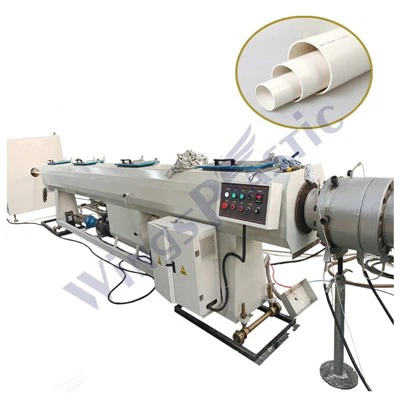
If you’re dealing with slow production, high scrap, or missed quality targets on your PMMA PC pipe line, it’s time to stop settling for “good enough” and start getting the performance you need. We specialize in tailored upgrades for existing extrusion lines, no matter what brand your current machine is, and we’ll work with you to build a plan that fits your production goals and budget. Contact our team today to schedule a site assessment and see how much more your existing machine can do.
Plastic Spiral Corrugated Pipe Machine References:
- Extrusion: The Definitive Processing Guide and Handbook, Second Edition, L.A. Malloy, William Andrew Publishing, 2005
- Polymers for Extrusion: Properties and Processing, J.M. Gordina, CRC Press, 2018
- PMMA and PC Pipe Manufacturing: Best Practices for Dimensional Consistency, Society of Plastics Engineers (SPE) Extrusion Division, 2021
- Energy Efficiency in Plastic Extrusion Machinery, International Energy Agency (IEA) Plastics Program, 2019
- Advances in Screw Design for Thermoplastic Extrusion, Journal of Plastics Technology, Vol. 12, No. 2, 2016
Qingdao Wings Plastic Technology Co., Ltd.
As one of the most experienced pmma pc pipe making machine manufacturers and suppliers in China, we also support customized service. Please feel free to buy durable pmma pc pipe making machine made in China here from our factory. For price consultation, contact us.
Address: C02 Of Anshengyi Road, No.2 Fuan Industry Zone,Jiaodong Town, Jiaozhou City, Qingdao City, Shandong Province,China
E-mail: kelly@wingsplastic.com
WebSite: https://www.wingsextruder.com/
