If you’ve ever wandered a warehouse floor, loading docks, or even a construction site, you’ve likely run into a heavy-duty plastic tote. These aren’t the flimsy, throwaway bins you pick up at a big-box store for closet organizing—they’re workhorses built to stack, haul, and protect whatever’s inside through years of rough use. As someone who’s been supplying heavy-duty plastic totes for over a decade, I’ve lost count of how many times a customer has pulled me aside mid-pickup or slid into my DMs panicking because they bought totes that either cracked on their first job or cost way more than they needed to. The biggest question I get? “What thickness should I actually be looking for in a heavy-duty plastic tote?” Plastic Totes
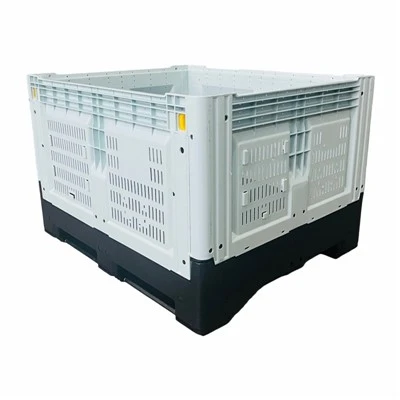
It’s not a one-size-fits-all answer, and that’s part of why so many people get it wrong. A lot of suppliers will slap a “heavy-duty” label on a bin and call it good, but the truth is thickness is just one piece of the puzzle—wait, no, actually it’s the foundation. Thickness (measured in gauge or mils, for the uninitiated) directly ties to load capacity, impact resistance, chemical tolerance, and even long-term cost. Let me break this down the way I walk new customers through it, no confusing industry jargon, just real-world context.
First, let’s get the basics straight: when we talk about heavy-duty plastic totes, we’re not talking about the 10-mil bins that hold a few kids’ toys. Mil is the standard unit here; one mil is 1/1000 of an inch, so 20 mil is 0.02 inches thick. Gauge is sometimes used interchangeably, but for plastic, mil is more accurate because gauge can shift slightly depending on resin type. For context, a credit card is about 30 mil thick, so a 20-mil tote is thinner than that, a 40-mil is thicker. Now, heavy-duty starts at 35 mil and goes up to 80+ mil for the most industrial jobs.
But before you lock into a number, stop and ask yourself two questions: What am I putting in these totes? And how hard will they work? I’ve seen customers grab the thickest tote on the shelf just to be safe, only to realize it adds 50 pounds to their load, makes their pallet stacks uneven, and cuts into their forklift’s weight capacity. I’ve also seen customers go too thin, and by month three, half their totes have cracked at the corner or split along the side while hauling 50-pound parts.
Let’s break it down by use case, because that’s where the thickness math lands best.
Starting with the most common mid-range industrial job: general warehouse storage, parts sorting, or e-commerce order fulfillment. Most small to mid-sized warehouses that store non-fragile, non-chemical items (like hardware, apparel, bulk packaging supplies) work great with totes between 35 mil and 45 mil. Wait, why that range? Let’s test it. A 35-mil tote is thick enough to hold up to 500 pounds of evenly distributed weight—perfect for stacking 10 totes high on a standard pallet, no bowing or sagging. I supply 38-mil totes to a few local e-commerce clients, and they’ve used them daily for six years now; the only time one cracked was when a forklift driver dropped it from 3 feet up onto concrete, which even a 60-mil tote would struggle with.
Upgrade to 45 mil, and you get into the zone for slightly heavier loads, or for use cases that involve more handling. Think: grocery distribution, where totes get hauled from loading dock to cooler multiple times a day, or manufacturing parts departments where bins are tossed between workstations. A 45-mil tote can hold up to 700 pounds, and the extra thickness means it’s less prone to scuffs, scratches, and those tiny stress cracks that turn into big splits over time. I always tell people if you’re moving totes more than 10 times a day, go for 40 mil minimum, 45 mil if you’re on concrete more than asphalt.
Now, move into the heavy-hitter jobs—this is where thickness really matters. If you’re hauling or storing chemicals, metal parts, construction debris, or anything that’s sharp, heavy, or corrosive, you’re looking at 50 mil and up, usually up to 65 mil. I recently supplied a construction waste company with 55-mil totes, and they were shocked at how much better they performed than the 40-mil bins they were using before. Those 40-mil ones were splitting every two weeks when hauling rebar scrap and concrete chunks; the 55-mil ones have lasted 18 months, and the only wear is scuffs, no cracks. For chemical storage, you’ll often see these thicker totes made with HDPE (high-density polyethylene) that’s also UV-stabilized, so the extra thickness protects the resin from breaking down when exposed to oils, solvents, or sunlight. A 60-mil tote can hold up to 1,000 pounds, and I’ve had a few agricultural clients use 65-mil totes for bulk fertilizer and seed storage, left outside all year round, that haven’t cracked in four years.
Beyond 65 mil, you’re entering into the extreme industrial category—think military use, aerospace parts storage, or heavy manufacturing environments where totes are stacked 20+ high, or moved with heavy equipment over rough terrain. These totes are usually 70 to 90 mil, and they’re so thick they’re almost rigid, with reinforced corners and ribbed sides to distribute weight. I don’t recommend these for most businesses, because they’re bulkier, heavier, and more expensive. If you don’t need that level of durability, you’re wasting money and dealing with unnecessary weight that cuts into your operational efficiency.
Wait, but here’s the thing about thickness that most people don’t tell you: it’s not just about the total mil. The way the thickness is distributed matters too. A good heavy-duty tote will have consistent wall thickness, not thin spots at the corners or the base that are hidden in the spec sheet. That’s why I always tell customers to ask for test samples before buying a bulk order—grab a tote, run your finger along the sides, press firmly on the base. If it gives too much, it’s not heavy-duty, no matter what the mil says. I once had a customer come to me after buying 1,000 totes from a supplier that listed them as 40 mil, but when they arrived, the sides were only 25 mil and the base was 30 mil. They saved a nickel per tote, but 20% of them cracked in the first month, costing them way more in replacements and downtime.
Another factor to consider when judging thickness: load type and stacking. If you’re storing heavy items, the base of the tote has to be thicker than the sides, right? That’s where ribbing comes in, but the thickness of the base itself is critical. A lot of cheap totes have thin bases that bow under even moderate weight, which makes stacking impossible without extra support. For example, a 40-mil tote with a 35-mil base will bow at 500 pounds, but a 38-mil tote with a 40-mil base will hold 500 pounds flat, no problem. That’s why my team always emphasizes total mil plus base thickness in our product specs—no hidden fine print.
And let’s talk about long-term cost, because I know that’s a big driver for most businesses. It’s tempting to buy the thinnest “heavy-duty” tote you can find to save money upfront, but that’s a false economy. Let’s do a quick math example. Suppose you need 100 totes for a general warehouse job. A 35-mil tote costs $10 each, and lasts 2 years. A 45-mil tote costs $15 each, and lasts 5 years. Over 10 years, the 35-mil tote would cost you $5,000 in replacements (100 totes x $10 x 5 sets of replacements) plus downtime from cracked totes. The 45-mil tote would cost $1,500 total, and last the whole 10 years. That’s a no-brainer, right? The same goes for when you go too thick: if you pay $25 for a 70-mil tote when you only need a 40-mil, you’re wasting $15 per tote, which adds up fast if you’re buying hundreds or thousands.
I also get asked a lot about mil vs. weight per cubic foot, and while that’s another way to measure durability, mil is more straightforward for end-users. The one caveat is if you’re dealing with specialized resins—like UV-stabilized HDPE or chemical-resistant polypropylene—those can be slightly thicker for the same durability as standard HDPE, but that’s a small adjustment, and a good supplier will note that.
Let me wrap this up with a quick, actionable guide so you don’t overcomplicate it. First, figure out your core use case:
- General storage, parts sorting, e-commerce fulfillment, low handling: 35-40 mil (base thickness equal to or greater than side thickness)
- Moderate handling, grocery, distribution, 10+ daily moves: 40-45 mil
- Heavy loads, construction, chemical storage, outdoor use, rough handling: 50-65 mil
- Extreme industrial, military, heavy equipment use: 70+ mil (only if you truly need it)

And don’t forget the test: when you get a sample, drop it from chest height onto concrete. If it doesn’t crack, and you can press a finger into the side with minimal give, you’ve got the right thickness. If it bends like a credit card, walk away.
Plastic Dolly At the end of the day, choosing the right thickness for heavy-duty plastic totes is about matching your needs to the product, not chasing the highest number on a spec sheet. I’ve been in this business long enough to know that the best tote for a business is the one that lasts, doesn’t cause headaches, and fits their budget. If you’re not sure which thickness is right for your specific operation, or you want to see test samples tailored to your needs, reach out to my team to discuss your requirements. We can walk through use cases, load weights, and any special needs you have to make sure you get exactly the right totes for your work. When you pick the right thickness, you’re not just buying bins—you’re investing in fewer replacements, less downtime, and a smoother operation.
References
- American Society for Testing and Materials. Standard Test Method for Thickness of Plastic Films and Sheeting. ASTM D374-17, 2017.
- Industrial Plastic Storage Tote Association. Durability and Performance Specifications for Heavy-Duty HDPE Totes. IPSTA Technical Bulletin 2022-03, 2022.
- National Renderers Association. Guide to Resin Thickness and Durability for Industrial Containers. NRA Publication No. 12-19, 2019.
- Occupational Safety and Health Administration. Warehouse Storage Equipment Safety Guidelines. OSHA 3370-07N, 2021.
Ningbo Simple Trading Co., Ltd.
Address: Room 3136, North Building of Yinzhou Chamber of Commerce Building, No.1299, Yinxian Boulevard, Shounan Subdistrict, Yinzhou District, Ningbo City, Zhejiang Province
E-mail: Simpleexport@nbsimpletrading.com
WebSite: https://www.logisticsequipments.com/
