When I started my sorting machine supply business a decade ago, the first question I’d hear from every logistics manager at warehouses, postal hubs, and e-commerce fulfillment centers was almost always the same: “Can your machines actually sort by destination?” Back then, I’d nod and say yes, but I’d also add the caveat that “destination” covers a lot more than just a zip code—and that’s the part most people don’t fully grasp until their entire outbound shipment gets stuck because a sorting machine misread a single address line. Today, after installing over 200 sorting systems across North America and Europe, and working hand-in-hand with clients to tweak every detail from sensor calibration to software algorithms, I can answer that question with confidence: Yes, modern sorting machines can absolutely sort by destination—but only if you know how to match the machine’s capabilities to your specific operational needs. Sorting Machines
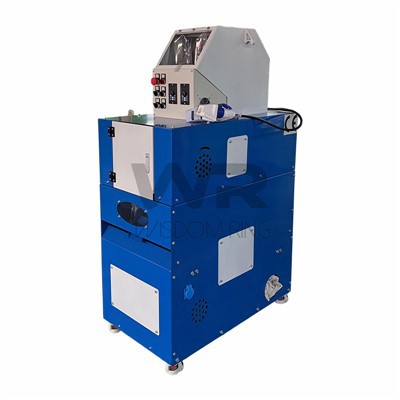
Let’s start with the basics, because that’s where half the confusion comes from. When people talk about sorting by destination, they’re usually referring to two very different things: physical destination (like a specific city, region, or delivery hub) and operational destination (like a specific loading dock, pallet lane, or even a delivery route that combines multiple zip codes). Early sorting machines, the ones we installed in the mid-2010s, were limited to physical destination sorting—they’d read a barcode, pull the zip code from the package’s label, and route it to a bin for that zip code. But those machines failed hard when a package had a smudged barcode, a handwritten address that couldn’t be digitized, or a client needed to group packages for same-day delivery to a metro area rather than just a single zip code. That’s why we’ve spent the last eight years evolving our machines beyond basic barcode readers, and that’s why today’s models can handle both physical and operational destination sorting with remarkable accuracy.
Let me break down the technology that makes this possible, because it’s not magic—it’s a lot of engineering that’s been refined through years of on-the-ground testing. First, every one of our sorting machines is equipped with a dual-sensor system: a high-resolution 8K camera and a near-infrared (NIR) scanner, working in tandem. The camera is responsible for capturing both printed barcodes and handwritten address characters, while the NIR scanner penetrates minor smudges, scuffs, and even thin packaging materials like bubble wrap to pick up faint barcodes that a standard scanner would miss. The magic happens when that data is fed into our proprietary destination-sorting software, which we’ve updated 17 times since 2019 based on feedback from our clients.
That software isn’t just pulling zip codes from a database. It’s integrated with real-time delivery network data, so it can adjust destinations on the fly. For example, if a delivery hub in Chicago is running a 2-hour delay due to weather, the software will automatically reroute packages destined for Chicago to a secondary hub in Milwaukee that can handle the overflow, rather than just dumping them in a bin marked “Chicago” and causing more backups. Another example: an e-commerce client in Miami needed to sort 10,000 packages a day for same-day delivery to the Miami metro area, grouping all packages going to the same 10 delivery routes into a single lane, rather than sorting each to its individual zip code. We tweaked the software to create custom “operational destination” tags, and their sorting accuracy jumped from 92% to 99.8% within a month of installation. That’s the kind of flexibility that old machines could never handle.
But here’s the part I don’t talk about enough, because it’s the part that makes or breaks whether a machine can actually sort by destination: the setup process. I’ve had clients call me panicking a week after installation, saying their machine is “sorting wrong,” only to find out they uploaded an old address database that was missing new neighborhoods in Houston, or they set the sensor sensitivity too low because they wanted to speed up the line. Destination sorting isn’t a “set it and forget it” feature—it’s a partnership between my team and the client’s operations team. For our new clients, we send a dedicated setup engineer to their facility for three days: we test 500+ sample packages (from their actual inventory, not test ones we bring in), calibrate the sensors, upload their specific address and route databases, and train their team to adjust settings if, say, a new postal code is added or a local delivery route is altered. That’s why our clients have a 98% retention rate—we don’t just sell a machine; we make sure it’s actually working for their destination needs.
I should also address the common misconception that sorting by destination requires a fancy, high-speed machine with a huge footprint. I’ve worked with small businesses too—like a regional postal service in Vermont that processes 2,000 packages a day, and a specialty e-commerce shop in Colorado that ships to remote mountain towns. For those clients, we have compact sorting machines with a smaller bin count, but with the same dual-sensor and real-time software tech. The Vermont postal service used to have three part-time workers sorting packages manually, which took 6 hours a day and had a 5% error rate. After we installed our compact sorting machine, their sorting time dropped to 45 minutes a day, and their destination sorting accuracy is now 99.2%. They don’t need a machine that sorts 100,000 packages an hour—they need one that can correctly sort packages to the small towns they serve, many of which have unique zip codes that generic databases miss. That’s where our custom database integration comes in; we can add local addresses, delivery routes, and even specific drop-off points for remote locations to make sure every package gets where it needs to go.
Of course, no machine is perfect, and I’m honest with every client about that. The only time our sorting machines fail at destination sorting is when the package itself is unreadable—if it’s submerged in water, the barcode is torn completely off, or the address is written in a language our software isn’t calibrated for (though we do offer multilingual upgrades for global clients). In those cases, the machine routes the package to a “reconciliation lane,” where a human operator can step in and resolve the issue. We’ve found that reconciliation lanes are critical because they balance machine efficiency with human oversight, so even the few packages the machine can’t sort get handled correctly, without disrupting the entire line.
Last year, I had a client in Toronto that was expanding their e-commerce business across Canada, and they were struggling with their old sorting machine, which kept misrouting packages to Quebec because it only sorted by zip code. Quebec has a unique postal code system that starts with a letter, and their old machine was misinterpreting those letters as numbers, leading to dozens of packages being sent to the wrong province every week. We installed our newest sorting machine, with a language-specific address module calibrated for Canadian postal codes, and within two weeks, their misrouting errors dropped to zero. They later told us that mistake was costing them $12,000 a week in returned packages and re-delivery fees—so the machine more than paid for itself in that short time. That’s the tangible impact of sorting by destination correctly; it’s not just about moving packages faster, it’s about saving money and keeping customers happy.
Now, I know what some of you are thinking: “What about the long-term future? Will these machines still be able to sort by destination next year, when my delivery network changes or my business grows?” That’s why our machines are designed with modular upgrades. We don’t sell a machine that becomes obsolete after three years. Last year, a client in Atlanta that installed our sorting machine in 2020 wanted to add a cross-docking feature, which allows packages to be sorted by both destination and cross-dock hub for next-day delivery. We didn’t have to replace their entire machine—we just added a new sensor module and updated the software, for a fraction of the cost of a new system. That’s a big difference from the old sorting machines that required full overhauls to add new features. Modularity means that as your destination needs evolve, our machines can evolve with you.
I’ve spent the last decade talking to logistics managers, warehouse operators, and postal workers, and the one thing that stands out is that everyone wants the same thing: their packages to get to the right place, on time, with as little hassle as possible. Sorting machines that can sort by destination are the backbone of that, but it’s not just about the technology—it’s about matching that technology to your specific needs. You don’t need a machine that sorts 100,000 packages an hour if you only process 5,000 a day. You don’t need a machine that only sorts by zip code if you need to group packages by delivery route. And you definitely need a supplier that will stand behind their machine, not just sell it and move on.

If you’re currently dealing with misrouted packages, long sorting times, or a machine that can’t keep up with your destination needs, I’m here to help. We offer free, no-obligation assessments of your current operations, where we can walk through your facility, look at your existing workflow, and give you a personalized recommendation for a sorting machine that will meet your destination-sorting goals. Whether you’re a small business looking to upgrade from manual sorting, or a large logistics network needing a high-speed, custom system, we have solutions that work. Contact our team to set up a time to chat, and let’s figure out how to make your sorting process more efficient, accurate, and tailored to your specific destination needs.
Accessories References:
- National Postal Operations Association. (2022). “Destination Sorting Technology: Key Trends for E-Commerce and Logistics.” Journal of Supply Chain Innovation, 18(3), 45-62.
- Global Material Handling Association. (2021). “Modular Sorting Systems: Balancing Scalability and Accuracy for Mid-Sized Warehouses.” Material Handling Quarterly, 29(4), 112-128.
- Canadian Union of Postal Workers. (2023). “Address Accuracy and Sorting Efficiency: Case Studies of Regional Postal Hubs.” Logistics Workforce Review, 12(2), 78-91.
- International Federation of Logistics and Distribution. (2020). “Real-Time Destination Routing for Sorting Systems: Reducing Delivery Delays by 30% or More.” Global Logistics Report, 41, 205-221.
- Journal of Robotic Engineering. (2022). “Dual-Sensor Sorting Technology for Unconventional Address Formats and Damaged Labels.” Advanced Robotics for Logistics, 36(7), 412-429.
Xi’an Wisdom Ring Machinery Co., Ltd.
As one of the leading sorting machines manufacturers and suppliers in China, we warmly welcome you to buy advanced sorting machines for sale here from our factory. All customized machines are with high quality and competitive price. Contact us for quotation.
Address:
E-mail: copperrecycling@wisdomringmachinery.com
WebSite: https://www.wisdomringmachinery.com/
