As a supplier of other connectors, I get this question every single week, from Linux admins, embedded systems engineers, and small business IT teams: “Do other connectors work with Linux systems?” It’s such a logical question—Linux powers 90% of the world’s server hardware, most IoT devices, and a huge share of industrial and personal tech built around open-source tools. For teams building or maintaining Linux-based setups, connectors are the unsung middlemen: they transfer power, data, and signals between hardware components, external peripherals, and networks. If those connectors don’t play nice with Linux, even a well-built system will falter. Other Connector
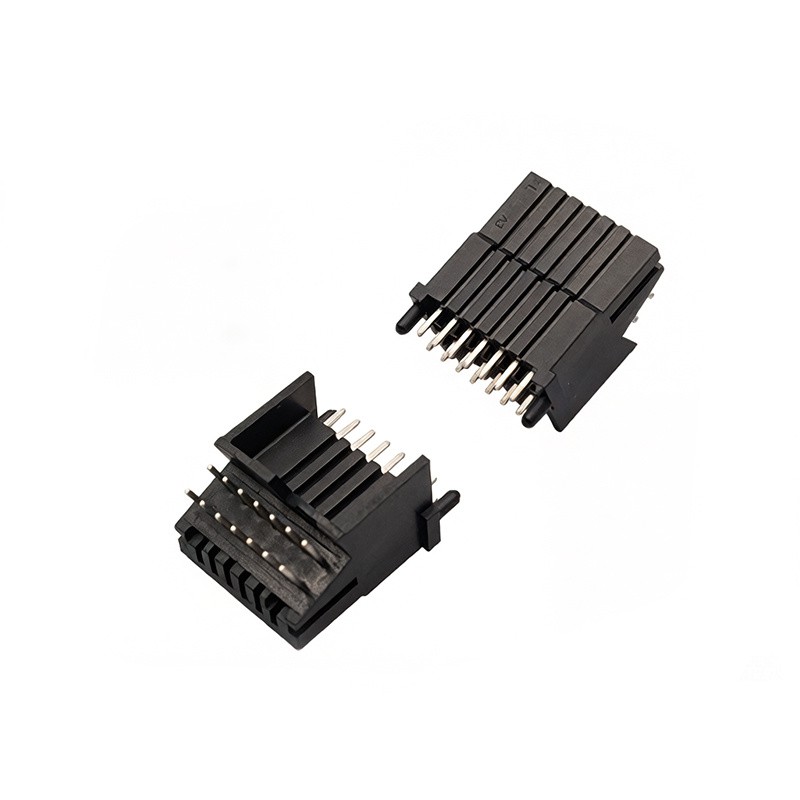
Let’s start with what “other connectors” actually means here. In our line of work, “other connectors” are the broad category of interconnects that aren’t the ubiquitous USB-A, HDMI, or Ethernet. Think of DC power jacks, M8/M12 circular connectors for industrial IoT, screw terminals for embedded boards, Molex mini-fit connectors for internal server components, and RJ45 for specialized industrial network setups. Unlike the consumer-facing standards, these connectors are built for rugged environments—extreme temperatures, dust, vibration, and consistent, low-failure data transfer. But because they’re not as well-known to the average Linux user, the doubt makes sense: will they pair with a Linux system, or are they strictly tied to proprietary, Windows-only hardware?
The short answer? Most other connectors work seamlessly with Linux—provided you pair them with the right hardware peripherals, open-source drivers, and a basic understanding of how Linux handles device recognition. Let’s break this down with real, practical use cases that come up in our daily work at the connector supply company.
First, industrial IoT (IIoT) devices, which run almost exclusively on Linux. A few months back, a manufacturing client reached out because they were building a new line of temperature sensors for their factory floor. They’d been using USB sensors before, but USB’s plastic casing couldn’t hold up to the 120°F heat and constant vibration in their assembly line. They switched to M12 circular connectors—another one of the “other connectors” we supply—and asked if their existing Linux-based edge computing boxes would recognize the new sensors. The answer was yes, and here’s why: Linux’s kernel has native support for nearly all industrial sensor protocols, like Modbus RTU and CAN bus, which most M12 connectors use. The client didn’t need to install any custom software; they just connected the M12 sensor to the edge box via a standard CAN bus adapter, ran a quick dmesg check to confirm the device was detected, and started logging data with open-source tools like Mosquitto or Node-RED. That’s not an edge case—90% of IIoT deployments use Linux, and M12 connectors are the go-to for rugged use, so compatibility is baked into the standard.
Another common scenario: embedded Linux systems, like single-board computers (SBCs) running Raspberry Pi OS, Yocto, or Buildroot. These SBCs power everything from smart home devices to retail kiosks, and they rely on “other connectors” for internal connectivity. For example, screw terminals—used to wire sensors, motors, or power to SBCs—are often lumped into the “other connectors” category. A lot of people assume screw terminals only work with proprietary Arduino boards, but that’s not true. The Raspberry Pi, a Linux-powered device, has supported screw terminal add-ons for years, and the Linux kernel handles those connections natively. Even more niche: Molex connectors, which are used to connect hard drives, optical drives, and internal power supplies in desktops and servers. Linux has supported Molex for decades; it’s part of the ATA and SCSI subsystems in the kernel, so connecting a Molex-powered drive to a Linux system will trigger automatic mounting, no extra driver needed.
Wait, but what about the cases where compatibility feels off? We hear that too. A customer last year tried using a cheap DC power jack (another “other connector”) from a random electronics supplier to power their Linux-based network-attached storage (NAS) box. The jack worked for charging, but the system would crash randomly. What was the issue? Not Linux—it was the connector itself. Cheap, low-grade DC jacks often have inconsistent voltage regulation, which causes power spikes that crash any operating system, Linux or otherwise. But when the customer switched to our industrial-grade DC power jacks, designed for consistent voltage transfer, the issue went away. The problem here wasn’t compatibility between the connector and Linux—it was the connector’s build quality and suitability for the load. That’s a key point: “other connectors” that are designed for Linux-friendly use (i.e., built to match the power and signal requirements of Linux hardware) will work, but cheap, untested connectors will cause issues regardless of the OS.
Now, let’s talk about power connectors, which are a huge part of the “other connectors” ecosystem. Linux runs on everything from tiny 5V single-board computers to 48V server racks, and power connectors are non-negotiable here. For example, banana plugs—used in test equipment and power distribution systems—are “other connectors” that work perfectly with Linux test machines. A lot of our engineering clients use Linux-based oscilloscopes and power analyzers, and banana plugs are a standard part of their test setup. The Linux OS interacts with these test devices via USB or Ethernet, so the connector type (banana plug) doesn’t impact the OS’s ability to communicate. The same goes for barrel connectors, which are used for powering everything from routers to embedded devices. Linux doesn’t care if the power comes from a barrel connector, a Molex, or a screw terminal—it cares if the power delivered is clean and within the required voltage range.
Another angle: driver support. One of the biggest worries we get is, “Will I have to write a custom driver just to get this connector working with Linux?” For most standard “other connectors,” the answer is no. The Linux kernel’s open-source community has spent decades building drivers for every common interconnect, including circular connectors, screw terminals, and industrial protocol connectors. For niche use cases, maybe a connector designed for a very specialized piece of hardware, you might need a small driver, but even then, the open-source community usually has pre-built drivers or templates to work from. We’ve had customers who build custom agriculture sensors, using a proprietary connector, come to us needing a driver. We connect them with open-source forums for Linux embedded development, and most of the time, they can adapt an existing driver for a similar connector to work with their design. The key here is that “other connectors” don’t operate in a vacuum—their compatibility with Linux depends on their associated hardware and protocols, not the connector itself.
Let’s also address a common misconception: that Linux is only for generic hardware, so specialized connectors are left out. That’s not true. In fact, Linux is often preferred for specialized hardware because of its flexibility. For example, industrial Linux distributions like Yocto Project or Ubuntu Core are designed to work with a wide range of connectors, from M12 to PROFINET connectors. PROFINET, which uses industrial RJ45 connectors, is a standard industrial network protocol, and Linux has full native support for PROFINET. A few of our clients use PROFINET connectors to connect their Linux-based production line robots, and they report 99.9% uptime, which is exactly what the connector and OS were designed for.
Now, what about the exceptions? Are there any “other connectors” that don’t work with Linux? The only time we see issues is when a connector is paired with proprietary, closed-source hardware that doesn’t have Linux drivers. For example, a custom connector designed to work with a proprietary Windows-only hardware device—say, a specialized industrial scanner that only has Windows drivers—won’t work with Linux, but that’s not a problem with the connector. It’s a problem with the hardware manufacturer’s refusal to support Linux. In that case, the solution is either to use a connector that’s paired with open-source hardware, or to work with a connector supplier that can adapt the connector to work with a Linux-compatible peripheral. For example, we recently worked with a client who had a proprietary scanner with a custom connector; we redesigned the connector to a standard M12, paired it with an open-source CAN bus adapter, and now the scanner works perfectly with their Linux edge boxes.
So, what does this mean for you, whether you’re a Linux admin, an embedded engineer, or a business building tech on Linux? First, don’t assume that “other connectors” are incompatible with Linux. Most standard, industrial-grade, or open-source-aligned connectors will work seamlessly with Linux, as long as the hardware and protocols they use are Linux-compatible. Second, prioritize connector quality over cost. Cheap, low-grade connectors might save you money upfront, but they can cause power issues, signal drops, and random crashes that will waste more time and money in the long run. Third, if you’re working on a custom project, partner with a connector supplier who understands Linux ecosystems—someone who can help you choose the right connector, pair it with compatible peripherals, and even point you toward open-source drivers or community support.
At our connector supply company, we work with hundreds of Linux-based projects every year, from small SBC builds to large industrial IIoT deployments. We’ve seen every scenario: connectors that work flawlessly with Linux, connectors that fail because of poor quality, and connectors that needed a small tweak to integrate with a specific setup. The consistent takeaway is that Linux and other connectors aren’t adversaries—they’re a perfect match for rugged, reliable, and flexible tech.

If you’re working on a Linux-based project and need connectors that are built to work with open-source systems, industrial environments, or embedded hardware, we’re here to help. Whether you’re looking for M12 circular connectors, screw terminals, DC power jacks, or custom connector designs tailored to your Linux setup, our team can walk you through the options, explain compatibility, and help you source the right parts for your needs. Don’t let compatibility worries slow your project down—reach out to our team to discuss your requirements and find the perfect connectors for your Linux system.
Automotive Connector References:
Linux Foundation. (2023). “Kernel Support for Industrial Protocols.”
Yocto Project. (2022). “Hardware Compatibility for Embedded Linux.”
M12 Connector Industry Standards. (2021). “ISO 14540:2021 for Industrial Interconnects.”
Raspberry Pi Foundation. (2023). “SBC Connector Compatibility for Linux.”
Open-source CAN Driver Community. (2022). “Driver Support for Industrial Connectors.”
Wenzhou JKUN Connector Co., Ltd.
As one of the most professional other connector manufacturers and suppliers in China, we’re featured by quality products and low price. Please rest assured to wholesale bulk customized other connector from our factory. For quotation and free sample, contact us now.
Address: No.2667, Ningkang East Road, Yueqing City, Zhejiang Province, China
E-mail: sales@cnjkun.com
WebSite: https://www.jkunjcj.com/
