If you’ve ever walked through a display manufacturing plant, you know every second of downtime costs thousands of dollars. For a plant running 24/7 to produce OLED panels, LCD screens, or microLED displays, even a small hot spot on a reflow oven, a faulty heating element in a vacuum chamber, or misaligned cooling in a roller conveyor can lead to a bad batch of product, delayed shipments, and lost revenue. As someone who’s spent 12 years selling thermal imagers and working hand-in-hand with display plant maintenance teams, I can tell you that picking the right thermal imager for these inspections isn’t just about buying the most expensive one—it’s about matching the tool to the unique challenges of display manufacturing. Thermal Imager
First, let’s get one thing straight: display manufacturing has very specific thermal inspection needs that set it apart from other industries. A food processing plant might only need to check for hot spots on ovens, but a display plant has a dozen different processes, each with its own temperature range, surface finish, and inspection requirements. Let’s break down the key variables that make a thermal imager good for this space, and then I’ll walk you through the ones I’ve seen work best for our clients.
Temperature range is non-negotiable here. Most display manufacturing processes run from below room temperature (for some thin film deposition processes) up to 300°C, and some reflow ovens even hit 400°C. A thermal imager that tops out at 200°C is useless for checking those high-heat reflow zones. But here’s the catch: you also need low-temperature sensitivity to catch tiny hot spots on delicate components. OLED panels, for example, have thin organic layers that can degrade if exposed to even a 5°C hot spot that goes unnoticed. So you need an imager with a thermal sensitivity (NETD) of less than 50 mK at 30°C. That’s the difference between spotting a 1°C change and missing it, which can mean the difference between a perfect panel and a scrap one.
Spatial resolution is another big one. Display parts are tiny—microLEDs are just microns across, and the thin film transistors (TFTs) that power LCDs are even smaller. If your imager has a low resolution, you’ll see a blurry mess, and you won’t be able to tell if a hot spot is on a single transistor or a whole array. Let’s put this in perspective: a 320×240 pixel imager at a distance of 1 meter might have a spot size of 3mm, which is too big for inspecting small components on a display. A 640×480 pixel imager, paired with a good lens, can get a spot size of 0.5mm at that same distance—enough to zoom in on individual transistors or tiny heating elements in a chamber. Some people opt for 1280×1024 resolution, and while that’s overkill for some tasks, it’s great for plant-wide surveys where you need to check multiple ovens or conveyors at once without moving your camera.
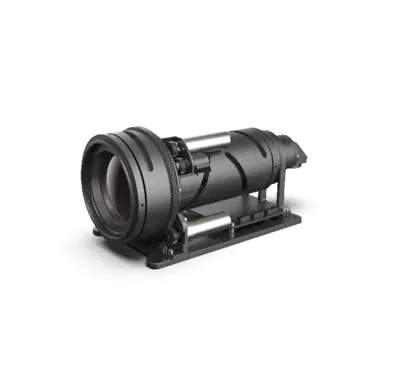
But here’s a mistake a lot of maintenance teams make: they buy a high-resolution imager with a terrible lens, and it doesn’t work. Display plants have a lot of shiny, reflective surfaces—metal chambers, glass panels, stainless steel conveyor belts. A standard thermal lens can pick up reflections, which mess up your temperature readings. You need a lens that’s designed to reduce specular reflection, or a wide-angle lens that lets you cover more area when checking for hot spots across a production line. Some of our clients also prefer a macro lens for close-up inspections of small components on a workbench, so having interchangeable lenses is a big plus.
Another unique challenge in display manufacturing: vibration. Production lines are always moving, and ovens and chambers have fans and motors that create constant vibration. If you’re using a consumer-grade thermal imager, it might struggle with image stability, leading to blurry readings. Industrial-grade thermal imagers have built-in image stabilization, and some even have a trigger that lets you capture a clear frame even when the camera is moving. That’s critical for inspecting moving conveyor belts without having to stop the line every time you take a measurement.
Now, let’s talk about the different models I’ve recommended to display plants over the years, and what works for each use case.
First, for routine inspections of ovens, conveyors, and large chambers: the mid-range industrial thermal imager with 640×480 resolution. We sold this model to a large LCD plant in South Korea last year, and their maintenance team now uses it to do a full line inspection in 15 minutes, instead of the 2 hours it took with their old imager. They love that it has a temperature range up to 550°C (more than enough for their 320°C reflow ovens), a NETD of 30 mK, and a 2x digital zoom that lets them zoom in on specific hot spots without losing resolution. It also has a rugged, IP54-rated body, which is perfect for display plants where there’s a lot of dust and moisture from cleaning processes. The only downside? It’s not great for close-up inspections of tiny components. For that, we recommend the high-resolution imager with interchangeable macro lenses.
That high-res model is what a microLED plant in Taiwan uses to inspect individual microLED chips on wafer. Wafer inspection requires measuring the temperature of 100-micron LED chips during the bonding process, and the imager’s 1280×1024 resolution and macro lens let them get a spot size of 0.2mm—small enough to measure each chip individually. It also has a “point measurement with multiple spots” feature, so the maintenance team can select 5 different chips at once and get temperature readings for all of them in one frame. That cuts down their inspection time by 70%, which is a huge deal when they’re testing hundreds of wafers a day. The only thing to note here is that the high-res model is a bit heavier, so it’s better for fixed use or stationary cameras mounted on a boom, rather than handheld daily inspections.
Then there’s the budget-friendly option for small display shops or prototype lines. A lot of startups making small OLED panels don’t have the budget for a high-end industrial imager, so we recommend a compact thermal imager that still meets the key specs: temperature range up to 400°C, NETD under 50 mK, and 320×240 resolution. It’s not as high-res as the larger models, but it’s portable, easy to use, and enough to catch most hot spots in a prototype line. We sold this to a startup in California last year, and they told us it paid for itself in the first month when it caught a faulty heating element that would have ruined a $10,000 prototype batch.
But no matter which model you pick, there are a few extra features that make a thermal imager great for display manufacturing, not just any industrial use. First, thermal imaging software that can integrate with your plant’s SCADA system. A lot of our clients want to automate their inspections—so if a hot spot reaches 10°C above the normal operating temperature, the imager sends an alert to the maintenance team’s phone, and logs the temperature data to the SCADA system. That way, you don’t have to rely on someone remembering to do weekly inspections; the imager does it for you. Some of the more advanced models even have AI-powered analysis, which can automatically flag hot spots and send a report to your team, so you don’t have to spend hours sifting through thermal images after an inspection.
Another feature I can’t stress enough: easy data export. Display plants need to keep records of all maintenance and inspection activities for compliance and troubleshooting. If your thermal imager only saves images in a proprietary format, you’ll spend hours converting them to share with quality control teams. The best models let you export images and temperature data as JPEG, CSV, or PDF, so you can easily include them in your production logs.
I’ve also seen a lot of teams make the mistake of thinking any thermal imager will work, and they end up paying for it. Last year, a small display shop bought a consumer-grade thermal imager for $500, and within a month, it was giving them incorrect readings because it couldn’t handle the high temperatures in their reflow oven. They ended up having to scrap two batches of panels, costing them $20,000, plus the cost of replacing the cheap imager with a proper industrial model. That’s the kind of mistake that’s easy to avoid if you know what to look for.
So to recap, here’s what you should prioritize when choosing a thermal imager for your display manufacturing plant:
- Temperature range: At minimum, up to 400°C; ideally 550°C for reflow ovens.
- Thermal sensitivity (NETD): Less than 50 mK, so you can catch small temperature changes.
- Spatial resolution: 640×480 is a sweet spot for most inspections; go 1280×1024 for small components or large line surveys.
- Lens design: Anti-reflective or interchangeable lenses to avoid reflections from shiny surfaces.
- Ruggedness: IP54 or higher, to handle dust and moisture in the plant.
- Software features: Data export, SCADA integration, and automated alerts.
Now, I want to be clear: every display plant is different. A small prototype line has different needs than a 24/7 LCD manufacturing facility. A microLED plant has different requirements than an OLED plant. The best way to pick the right imager is to talk through your specific processes with someone who knows display manufacturing and thermal imagers. That’s what we do here—we work with each client to understand their inspection needs, their production lines, and their budget, then recommend the model that will give them the best return on investment.
If you’re tired of wasting time and money on inspection tools that don’t work for your display plant, reach out to our team to schedule a consultation. We can even come to your facility to walk through your lines, show you our imagers in action, and answer any questions you have about how thermal inspection can reduce downtime, cut scrap rates, and improve your product quality.
Complex Parts References
- International Society of Automation. (2022). Thermal Imaging for Industrial Process Inspection.
- Society for Information Display. (2021). Thermal Management Challenges in Display Manufacturing.
- Fluke Corporation. (2023). Industrial Thermal Imager Selection Guide for Manufacturing Facilities.
- OLED Association. (2022). Quality Control Protocols for OLED Panel Production.
- MicroLED Industry Association. (2023). Wafer-Level Thermal Inspection Standards for MicroLED Manufacturing.
Xi’an Zhongke Lead Ir-Tech Co., Ltd.
We are one of the most experienced thermal imager manufacturers in China, specialized in providing high quality OEM products with the industrial grade. We warmly welcome you to wholesale high performance thermal imager at an affordable price from our factory.
Address: Building 8,Hard Technology Enterprise Community No.3000,Biyuan 2nd Rd,High-Tech Zone Xi’an,Shaanxi,China
E-mail: sales@lead-ir.com
WebSite: https://www.leadinfrared.com/
