Hey there, fellow makers, product designers, and supply chain folks—if you’ve ever sourced injection molded parts, you know one make-or-break detail that can turn a great prototype into a total dud: heat resistance. I’m Jake, owner of a small injection molded parts shop that’s been cranking out everything from kitchen appliance components to automotive trim for 12 years, and I’ve seen way too many projects tank because someone picked the wrong material to stand up to high temps. Today, I’m breaking down what you actually need to know about injection molded parts’ heat resistance—no stuffy industry jargon, just real talk from someone who’s stood in front of the injection molder more times than I can count. Injection Molded Parts
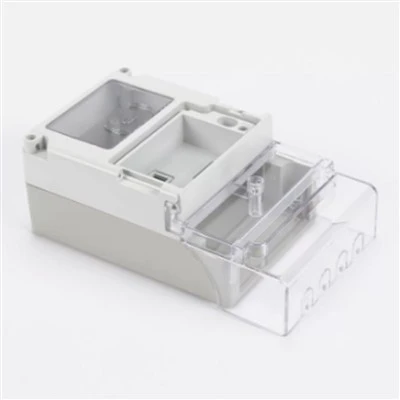
First off, let’s get one thing straight: heat resistance isn’t a one-size-fits-all number. You can’t just grab a plastic part and say, “This can handle 200°F” without context. Heat resistance for injection molded parts boils down to two key metrics that matter for everyday use: Heat Deflection Temperature (HDT) and Glass Transition Temperature (Tg). I used to mix these up when I first started out, so let’s keep ’em simple. HDT is the temp where a part starts to bend under a small load—like if a stack of dishes sits on a plastic lid, it won’t cave in until it hits HDT. That’s super important for parts that have to hold shape under pressure at high temps, like a car’s engine bay coolant line cover. Tg, on the other hand, is the temp where the plastic itself stops being solid and starts turning rubbery or molten. That’s your hard limit—hit Tg, and your part is basically unusable for its intended job.
Now, the biggest factor here? The base material you pick. I’ve heard designers say, “Oh, just use plastic—it’s plastic, right?” No way, man. Different plastics behave completely different when temps climb. Let’s run through the ones we deal with most at the shop, because these are the ones you’ll actually encounter when sourcing parts.
First, let’s talk about the “everyday” plastics—think polypropylene (PP) and polyethylene (PE). These are cheap, flexible, and great for water bottles or storage bins, but their heat resistance is total garbage. Standard PP has an HDT of around 120–150°F, and its Tg is even lower—you can’t put a PP spatula in a 180°F pan for long without it warping. Same with PE; HDT tops out at like 140°F for high-density PE, so don’t even think about using this for a part that’ll be near a radiator. These are fine for outdoor gear that never sees extreme heat, but not for anything that needs to perform when temps spike.
Next, we move up to the engineering plastics that actually hold their own. Polyethylene terephthalate glycol (PETG) is a step up—HDT around 160–180°F, so it works for microwave-safe food containers or display cases. But wait, if you need something tougher, polyamide (aka nylon) is where it’s at. Nylon has an HDT of 200–280°F, depending on if it’s reinforced with glass. We use a lot of glass-filled nylon for small engine components because it doesn’t warp when it’s 250°F under the hood—plus, it’s resistant to oil and grease, which is a bonus. But here’s a catch: nylon absorbs moisture, and that messes with its heat resistance. If you don’t dry the nylon pellets before molding, the finished part will be brittle and its HDT drops by 50°F or more. I’ve had to scrap entire runs because a new operator skipped the drying step—don’t let that happen to you.
Then there are the heavy hitters: thermosets and high-performance engineering plastics like PEEK, PPS, and Ultem. These are the ones that handle extreme heat—like 500°F and up. We don’t use these for every part, obviously, because they’re pricey. But if you’re making aerospace components or medical device parts that go through sterilization cycles (like autoclaves that hit 270°F), Ultem is your guy. Its HDT is around 340°F, and it stays rigid even when it’s that hot. PPS is another big one for automotive under-hood parts; it has an HDT of 400°F, so it’s basically immune to the engine’s heat. Thermosets, by the way, are different because they don’t melt when heated—they cure permanently, so their heat resistance is way higher than thermoplastics. But they’re harder to work with for low-volume runs, so most of our custom parts are thermoplastics unless the project specifically calls for thermosets.
Wait, another thing that affects heat resistance way more than people realize: part design and processing. I can mold two identical parts out of the same nylon, but if one has thick walls and the other has thin walls, their heat resistance will be different. Thick walls take longer to cool in the mold, so they might have internal stress that makes them warp at lower temps. We always adjust cooling times and wall thicknesses depending on the material and the part’s end use. Also, additives make a huge difference. If you add glass fiber to a plastic, it bumps up the HDT a lot—like, non-reinforced nylon has an HDT of 180°F, but 30% glass-filled nylon jumps to 250°F. Flame retardant additives? They don’t usually change heat resistance much, but if you get a cheap additive, it might make the plastic degrade faster in heat. We stick to reputable suppliers for pellets because cutting corners on additives is a fast way to get a batch of parts that fail in 6 months instead of 5 years.
Let me give you a real example from our shop last year. A client came to us with a project for a coffee machine’s water reservoir lid. They initially wanted to use standard PP, but PP’s HDT is 130°F, and the coffee machine’s boiler hits 212°F. I told them PP would warp within a month—so we suggested a glass-filled PETG instead. Its HDT is 170°F, but wait, we added a heat stabilizer to the pellets, which pushed its long-term heat resistance up to 180°F. That part’s still going strong a year later, no warping, no issues. If they’d gone with the cheap PP, they’d be replacing lids every 2 months. That’s the stuff that makes the difference.
Now, what about common mistakes people make when choosing heat resistance? First, don’t confuse short-term heat exposure with long-term. A part that only has to handle 270°F for 10 minutes? That’s different from a part that has to stay at 180°F 24/7 for 5 years. That’s where heat aging tests come in—we run those in our shop by sticking finished parts in an oven at the expected use temp for 1,000 hours, then check for warping, brittleness, or discoloration. Clients often skip that step to save money, but it’s the best way to make sure your part doesn’t fail down the line. Second, don’t ignore load. If the part has to hold weight while it’s hot, its HDT is way more important than Tg. If it’s just a cover that doesn’t hold anything, Tg is the main factor. Third, a lot of people forget about environmental factors. If your part is outside, UV rays will make plastic degrade faster, which lowers its heat resistance over time. If it’s near chemicals (oil, cleaners), those can break down the plastic too. So even if a plastic has a great HDT, you have to account for what it’s exposed to day-to-day.
At the end of the day, your injection molded parts’ heat resistance is a mix of material choice, design, processing, and end-use conditions. I see clients get stuck on picking the cheapest material, but that’s a false economy. A $0.05 part that fails after a month is way worse than a $0.12 part that lasts 5 years. If you’re not sure where to start, send us your specs—we can help you pick the right material, run heat aging tests, and make sure your parts stand up to whatever temp they’re going to face. Whether you’re a startup making a new gadget or a big company needing high-volume parts, we’ve got the experience to get it right.
When you’re ready to source injection molded parts that won’t let you down when the heat turns up, hit us up to talk through your project. We can walk you through material options, explain tradeoffs, and make sure you end up with parts that perform exactly as you need.
Electronic Plastic Enclosure References
ASTM D648-18, Standard Test Method for Deflection Temperature of Plastics Under Flexural Load in the Edgewise Position
ASTM D790-17, Standard Test Methods for Flexural Properties of Unreinforced and Reinforced Plastics and Electrical Insulating Materials
Plastics Materials and Processes: A Concise Encyclopedia, 2nd Edition, Hanser Publishers, 2014
Yongkang Shunjiang Plastic Products Co., Ltd.
As one of the most professional injection molded parts manufacturers and suppliers in China, we offer a wide range of products with superior quality. Please feel free to wholesale bulk customized injection molded parts from our factory. Also, pricelist is available.
Address: Kangzhuang Road, Xicheng Subdistrict, Yongkang City, Zhejiang Province, China
E-mail: 15158911623@163.com
WebSite: https://www.shunjiangplas.com/
