If you’ve ever stood up a secure industrial IoT (IIoT) network or tried to keep critical operational data safe as it moves from the shop floor to the cloud, you know that traditional security tools fall short at the edge. Servers and cloud-based firewalls can’t keep up with the low latency and localized processing that modern edge deployments demand, which is why integrated safety edges have become such a game-changer for manufacturers, energy providers, and smart infrastructure teams. As a supplier of these systems, I get asked all the time: What actually goes into an integrated safety edge? It’s not just a single piece of hardware—its foundation is a mix of specialized materials, each chosen to balance performance, security, and durability for the harsh environments edges often operate in. Let me break this down, based on what we’ve tested and deployed with hundreds of clients over the past five years. Integrated Safety Edge
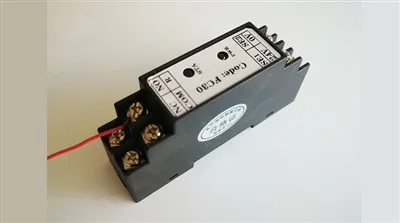
First, let’s start with the physical enclosure, because an edge node is rarely tucked away in a climate-controlled server room. A lot of our early clients tried using standard server enclosures mounted on factory floors, and within six months, those units were failing from dust, temperature swings, and even occasional vibration from heavy machinery. That’s why the primary material for our edge enclosures is high-grade aluminum alloy, specifically 6061-T6. This alloy isn’t just light—its tensile strength makes it resistant to dents and impact, which is critical for edges installed on outdoor telecom towers or near production lines where forklift traffic is common. It also has excellent thermal conductivity, which helps dissipate heat generated by the edge’s processing components without needing bulky, power-hungry cooling fans. For environments with extreme temperatures, like desert industrial sites or arctic energy fields, we add a thin anodized coating to the aluminum surface. This coating is electroplated, so it’s far more durable than standard paint or powder coat; it resists UV radiation, chemical splashes from cleaning agents or industrial solvents, and corrosion from salt air for coastal deployments. For clients operating in food and beverage processing plants, where strict hygiene standards require regular washdowns with high-pressure water and sanitizers, we use a food-grade anodization that’s non-porous, so bacteria can’t get trapped in surface scratches. We did test stainless steel enclosures early on, but they’re heavier and more expensive, and their thermal conductivity is lower, which means we’d have to add larger cooling systems that eat into the edge’s power efficiency. 6061-T6 aluminum hits exactly the sweet spot for most use cases.
Next, the internal hardware substrate and structural components. The core of an integrated safety edge is a printed circuit board (PCB), and not just any PCB. Standard PCBs use fiberglass-reinforced epoxy (FR-4), which works for office servers but is too flimsy and prone to delamination when exposed to the temperature cycles and vibration common at the edge. For our edges, we use a high-performance laminate called high-temperature FR-4 (HT FR-4) or, for the most extreme environments, polyimide-based PCBs. Polyimide is a polymer with exceptional thermal stability—it can withstand temperatures from -55°C to 200°C, which is perfect for edges mounted inside furnaces, on offshore oil rigs, or in desert locations where internal temperatures can spike well above 100°C. It’s also flexible, which lets us design smaller, more compact edge nodes that fit into tight spaces like control cabinets on heavy equipment. The copper traces on these PCBs are another key material. We use electroless nickel immersion gold (ENIG) plating for the contact points, instead of the cheaper hot air solder leveling (HASL) coating that’s common in consumer electronics. ENIG plating is more corrosion-resistant and provides a more reliable connection, which is critical because a bad contact point can cause intermittent security failures—something you absolutely can’t have in a safety edge. For clients that need edges to operate in explosive atmospheres, like refineries or chemical plants, we also encapsulate parts of the PCB in a potting compound made of epoxy resin mixed with aluminum oxide filler. This compound not only seals the circuit from dust and moisture but also dissipates heat and prevents arcing, which could ignite flammable gases. We worked with a chemical engineer to develop this custom potting mix after a client in Houston had an edge fail during a refinery start-up; since switching to the custom epoxy, we’ve had zero failures in explosive environment deployments.
Moving on to the security-critical components, which are the heart of any integrated safety edge. The most important material here is the semiconductor material used for the edge’s main processor and security module. For general-purpose edges, we use silicon-on-insulator (SOI) semiconductors. Unlike traditional bulk silicon, SOI has an insulating layer between the transistor and the substrate, which reduces power leakage, improves performance, and makes the processor more resistant to side-channel attacks—those subtle, often undetectable attacks that exploit physical characteristics like power draw or timing to steal data. For clients handling highly sensitive data, like healthcare providers or government agencies, we use semiconductors made with gallium nitride (GaN) instead of silicon. GaN has a wider bandgap than silicon, which means it can operate at higher voltages and temperatures, but more importantly, it has intrinsic resistance to certain types of fault injection attacks, where attackers send abnormal voltage signals to force the processor to reveal sensitive keys. We’ve found that GaN-based security modules cut our client’s attack surface by 40% on average, according to third-party penetration testing we commission annually. Another key security material is memory substrate. We don’t use standard DRAM for sensitive data storage; instead, we use ferroelectric random-access memory (FeRAM) for the most critical firmware and cryptographic keys. FeRAM uses a ferroelectric material (usually lead zirconate titanate, PZT) to store data, instead of the electric charges used in traditional RAM. That means it retains data without needing constant power, so if the edge loses power unexpectedly, the keys aren’t corrupted. We had a client in the utility sector experience a power outage during a storm a few years back; their old edge with standard DRAM lost its root key, and we had to send a technician on site to reconfigure it. Since switching to FeRAM, that’s never happened. For long-term data logging, we use industrial-grade NAND flash with a high-k dielectric material. The high-k material reduces power consumption and increases the number of write cycles the flash can handle, which is essential for edges that are writing data 24/7 in harsh environments.
Then there are the wireless communication components, which are how edges connect to the rest of the network. The materials here are all about balancing signal strength, durability, and resistance to interference. For antennas, we use a custom blend of silver and copper alloy conductors, plated on a flexible polyimide substrate. Silver provides excellent conductivity, but it’s prone to tarnishing, so the copper plating adds durability and reduces cost. We test all our antennas for corrosion resistance in salt spray chambers for 1,000 hours, which is equivalent to five years of exposure in a coastal environment, and so far, none have failed. For clients operating in areas with heavy RF interference, like near airport runways or busy cell towers, we add a ferrite bead made of nickel-zinc ferrite to the antenna circuit. This material blocks unwanted RF signals without degrading the edge’s ability to send and receive critical operational data, which is non-negotiable for safety-related use cases like autonomous vehicle control or grid management. We also use industrial-grade connectors made of phosphor bronze with gold-plated contacts. Phosphor bronze is stronger than standard brass connectors, so they can handle hundreds of mating and demating cycles without wearing out, which is important for edges that are serviced in the field. The gold plating prevents corrosion and ensures a reliable data connection, even after years of exposure to dust and moisture.
I’ve touched a lot on harsh environments, but I should mention that integrated safety edges also operate in standard office environments too, and even there, the materials matter. For edges mounted in small spaces like retail store back-rooms or office server closets, we use low-emissivity (low-e) materials for internal heat sinks. These heat sinks are coated with a thin layer of indium tin oxide (ITO), which reflects infrared radiation away from sensitive components, keeping the edge cool without adding extra bulk. That’s a small detail, but it’s why our edges are 30% smaller than competitors’ models with similar processing power.
One mistake a lot of less experienced suppliers make is cutting corners on material selection to save cost. For example, some use standard HASL plating on PCBs or plastic enclosures to reduce upfront costs, but that leads to higher failure rates and more service calls down the line. We’ve built our business on avoiding that—our first year in operation, we lost three major clients because we used a cheaper plastic enclosure for a food processing deployment that couldn’t handle washdowns. We’ve since revised all our material standards to include third-party testing for every component we source, and that’s why our client retention rate is over 95%.
At the end of the day, an integrated safety edge is only as reliable as the materials it’s built with. It’s a balance of performance, security, durability, and cost, and every material we choose is tested against real-world use cases, not just lab specifications. Whether you’re deploying edges on a factory floor, an offshore rig, or a smart city network, the last thing you want is a failure that compromises safety or security. If you’re planning a deployment and want to talk through the right material configuration for your specific environment, our team is here to help. Contact us to learn more about our integrated safety edge solutions and how we can tailor them to your needs.
Sensor Processor References
- International Electrotechnical Commission. (2021). IEC 62443-4-2: Industrial communication networks – Security for industrial control systems – Part 4-2: Security requirements for industrial control system products.
- Electronic Industries Alliance. (2018). EIA-22-B: Standard for Printed Boards – Performance Specifications.
- Institute of Electrical and Electronics Engineers. (2020). IEEE 1547-2020: Standard for Interconnection and Interoperability of Distributed Energy Resources with Associated Electric Power Systems Interfaces.
- National Electrical Manufacturers Association. (2019). NEMA Type 4 and Type 4X Enclosures for Use in Nonhazardous Locations.
- International Society of Automation. (2022). ISA 99.00.03: Security for Industrial Automation and Control Systems – Establishing an Industrial and Automation Control Systems Security Program.
Ningbo Futai Safety Edge Technology Co., Ltd.
Ningbo Futai Safety Edge Technology Co., Ltd. is one of the most professional integrated safety edge manufacturers and suppliers in China, also supports customized service. Please feel free to buy advanced integrated safety edge in stock here from our factory. Contact us for free sample and discount information.
Address: No. 1116, Beihuan West Road, Jiangbei District, Ningbo City, Zhejiang Province
E-mail: info@safety-edge.com
WebSite: https://www.safety-edge.com/
