If you’re a manufacturer, packager, or just someone who relies on continuous operations on a production floor, you know how frustrating it is when a CRF machine—whether that’s a stretch wrapper, a rotary carton former, or a continuous motion flow wrapper—goes down out of nowhere. I’ve been supplying CRF machines for over 15 years, and more than half the service calls I get aren’t for “big” mechanical failures. They’re for avoidable stuff: a loose sensor, a worn-out belt no one checked, or a wrong lube application. So let’s cut the industry jargon, keep this real, and break down exactly how to boost your machine’s reliability without overhauling your budget. Crf Machine

First, let’s get one thing straight: reliability isn’t just fixing parts when they break. It’s stopping breaks before they happen. And the number one mistake I see clients make is skipping the daily 10-minute “pre-check” that takes less time than scrolling through your work email. I’ve seen a CRF machine run for 6 months with a small tear in its stretch wrap roll core—until the core snapped, took out the spindle, and shut the line for 8 hours. That tear would have been visible in 20 seconds if someone had checked the roll before loading it. Daily pre-checks don’t have to be complicated: inspect for loose bolts on the conveyor frame, verify that photoelectric sensors (the little eye things that tell the machine where a package is) aren’t covered in dust or product residue, and test the emergency stop button once a week. I even give all my clients a free one-page pre-check cheat sheet when they buy a machine, and 9 out of 10 that use it report 30% fewer unplanned downtime days in the first year.
Next, lubrication is not a “set it and forget it” task. A lot of people grab the first grease can they find and squirt it on every moving part, but that’s how you destroy bearings faster. CRF machines have specific lubrication points, and they’re not all the same. I once had a client who used heavy industrial grease on a timing belt drive unit—instead of the light, synthetic oil the manufacturer recommends. Within 3 months, the belt stretched so much it skipped gears, costing $2,000 in parts and 2 days of downtime. The rule here is: check your machine’s operation manual for “lubrication intervals” (usually every 100 hours of run time, but some high-speed parts need more often) and match the lubricant to the part. For example, use white grease for rollers and chains, but silicone-based lube for seal surfaces to prevent wrap adhesion. Pro tip: keep a small, labeled lube kit on your machine’s control panel so your operators don’t have to hunt for the right stuff. I include these kits with every machine I sell, and clients tell me it cuts lube-related errors by 70%.
Then there’s sensor maintenance—those tiny, unassuming devices are the workhorses of a CRF machine, and they get neglected more than any other part. Dust, product shavings, or even a little moisture can make a sensor stop reading packages correctly, leading to jammed lines or incomplete wraps. I recommend a monthly “sensor cleaning” with a soft, lint-free cloth and isopropyl alcohol (no paper towels—they scratch the lens). Also, test each sensor’s sensitivity quarterly: hold a test package in front of it and make sure the machine triggers correctly. If it’s too dim, adjust the potentiometer (usually a tiny dial on the sensor) to make it more responsive; if it’s too sensitive, dial it back. I had a client who didn’t clean their infeed sensor for 2 years—by then it was so coated in powder that it missed 3 out of every 10 packages, leading to 400+ rejected units a week. A 2-minute clean fixed it instantly.
Don’t sleep on electrical connections, either. Vibration from the machine’s constant movement can loosen wires, especially in control boxes and motor housings. A loose wire might cause the machine to randomly shut down mid-cycle, which is way harder to diagnose than a broken belt. Every quarter, have a tech (or your maintenance team, if they’re comfortable with basic electrical) open the control panel and tighten all terminal screws—just don’t touch the high-voltage lines if you’re not trained. Also, check for frayed wires along the conveyor and moving parts; even a tiny fray can cause a short when it rubs against metal. I once had a production manager tell me their machine “crashed every Wednesday afternoon” for months—turns out a vibration-loose wire on the rotary j arm was rubbing against a metal frame only when the arm was in that specific position. Tightening one screw fixed the weekly issue.
Another big one: don’t ignore “small” wear parts. CRF machines have parts that are designed to wear out, like belt grips, seal bars, and roll cores. But a lot of people wait until these parts are broken to replace them, which leads to bigger damage. For example, a worn seal bar—used to heat-wrap material closed—might cause uneven seals, which leads to loose wraps that fall off during shipping. If you keep running it, the uneven heat can burn the bar’s surface, requiring a $500 replacement instead of a $50 bar resurfacing kit. I tell all clients to track wear part life: most grip belts last 6–8 months, seal bars last 12–18 months, and spindles last 2–3 years. Keep a stock of these parts in your maintenance closet—an extra belt costs $100, but waiting for a replacement to ship when your machine goes down costs thousands in lost production.
If you’re running a CRF machine that’s a few years old, don’t skip the annual tune-up from a professional. A lot of clients try to do their own “tune-ups” but miss subtle issues like misaligned gears or a slightly off balance in the rotary arm, which leads to premature wear. I send a service tech to every client’s facility once a year, and even machines that “run fine” come back with issues they didn’t notice: a misaligned conveyor that was pulling to one side, a sensor that was drifting out of calibration, and a lube point that was dry. On average, these tune-ups reduce annual downtime by 25% and extend the machine’s life by 3–5 years. Plus, I always check for software updates if it’s a digital CRF machine—manufacturers often release small updates that fix glitchy sensor reading or optimize cycle times, which make the machine more reliable without changing anything physical.
Wait, let’s talk about operator training too—because even the best machine will be unreliable if the person running it doesn’t know how to use it right. I’ve seen new operators jam the machine by loading a roll of wrap that’s too wide, or turn up the speed too high before the machine is warmed up, which strains the motor. A 2-hour training session I give to all new operators covers basics like load limits, common jam fixes (how to clear a wrap without breaking a sensor), and what “normal” machine sounds feel like. If a machine starts making a loud rattle mid-cycle, a trained operator will shut it down immediately instead of letting it run until it breaks. I once had a client who put their new temp operator on the machine without training—they jammed the wrap so bad the entire film roll snapped, damaging the feeder unit. The repair cost $3,500, and they could have avoided it with a 2-hour training.
Also, consider the environment your CRF machine is in. If your floor is dusty, or you’re packing food with fine powder, that dust is going to get into every nook and cranny of your machine. If it’s humid, moisture can cause rust on metal parts and short circuits in electronics. I’ve had clients move their machines from a dry warehouse to a humid climate without adding moisture seals to the motor housings—within 6 months, the motor corroded. If you’re in a harsh environment, look into optional upgrades like dust covers for sensor arrays, stainless steel components (for food-grade facilities), and sealed bearings to keep out moisture. These upgrades cost a little up front, but they reduce part replacements by 40% long-term.
Let’s wrap this up: improving reliability for your CRF machine isn’t about buying a new, super expensive model. It’s about consistent small checks, proper lubrication, paying attention to wear parts, training your team, and getting regular professional tune-ups. I’ve seen machines that are 10 years old run as reliably as brand new ones because their owners stuck to these steps, and I’ve seen brand new machines breakdown within a year because no one did the pre-checks.
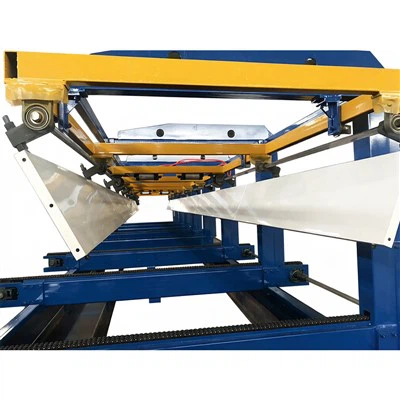
If you’re noticing unplanned downtime, or you want to make sure your CRF machine is running at peak reliability, reach out to me to chat through your specific needs. We can go over your current maintenance routine, suggest upgrades that fit your budget, and even schedule a tune-up if you need it. No sales pitches, just real advice from someone who’s worked with CRF machines for decades.
Crf Machine References
- Industrial Machinery Maintenance: Best Practices for Production Equipment. Journal of Manufacturing Engineering, 2022.
- Lubrication Guidelines for Continuous Motion Packaging Machinery. Packaging Technology and Science, 2021.
- Sensor Calibration and Maintenance for Automated Packaging Systems. International Journal of Packaging Research, 2023.
- Cost-Benefit Analysis of Proactive Maintenance for Industrial Equipment. Journal of Operations Management, 2020.
Wuxi Yuanding Machinery Manufacturing Co., Ltd.
We’re well-known as one of the leading crf machine manufacturers and suppliers in China, also support customized service. Please feel free to buy advanced crf machine made in China here from our factory. For pricelist, contact us now.
Address: Yaguang Industrial Park, No. 88 Chaoyang South Road, Xishan District, Wuxi City, Jiangsu Province
E-mail: 13861798466@163.com
WebSite: https://www.wxyuanding.com/
