If you’re in the market for a pelletizing line (or already own one and want to make sure it’s running right), you know that inspections and testing aren’t just “extra steps” — they’re what keep your production smooth, your product consistent, and your downtime to a minimum. As a pelletizing line supplier, I’ve walked my team through hundreds of pre-shipment, installation, and post-launch checks, and let me tell you: cutting corners here is a fast track to headaches. No one wants a line that clogs mid-production, gives you off-spec pellets, or breaks down 3 months after you take it home. Let’s break down exactly what we (and you) should be checking at every stage. Pelletizing Line

First up: Pre-Shipment Inspection (PSI). This is the first big checkpoint before your line leaves our facility, and it’s non-negotiable for us. Why? Because fixing issues in our workshop is way cheaper and faster than waiting until it’s on your factory floor. We start with a visual audit — nothing fancy, just a close look at every component. We check for weld cracks on the pellet mill’s die head, fraying on conveyor belts, loose bolts on the cooler units, and any scratches on control panel wiring. A lot of buyers skip this and get to their site only to find a small, fixable flaw that adds weeks to their timeline. We also do a dimensional check right here: we measure the distance between the die roller and the die plate (that tiny gap is make-or-break — too big and your pellets won’t compress, too small and you’ll wear out parts in no time). For our team, this step is just basic, but we always walk buyers through it so they know exactly what we’re checking before it leaves.
Next, a functional test run — the part we call a “dry run” before we even touch raw material. We power every unit on its own first, then run them in sequence. The feeder, pellet mill, conveyor, cooler, and packaging line all have to sync up perfectly. If the feeder runs too fast, it dumps too much material into the mill; too slow, and the mill runs empty, wearing out the die without making pellets. During this test, we monitor amps on all motors — a red flag is any amp draw higher than the motor’s rated limit (that means it’s overworking, and you’ll burn it out eventually). We also test safety features: emergency stops on every unit, guard sensors that shut the line off if someone opens a moving part’s cover, and pressure relief valves on the die (if the mill gets too hot, it needs to vent, not crack). We document every single readout here, and share that log with buyers before shipping — it’s proof we didn’t just “assemble a box” and call it a day.
Once the line arrives at your site, that’s when the on-site inspection hits. This is a big one because even a perfect factory test run can go sideways if the line isn’t leveled or connected right. First, we check the foundation — the pelletizing line can’t vibrate if it’s sitting on uneven ground, so we use a laser level to adjust the legs of each unit. Then, electrical connections: we’re not just talking about plugging it in (though that’s part of it) — we test voltage drops across all circuits, make sure ground fault protection is working, and verify that control panels are calibrated to match the local power supply. A lot of sites have wonky power, and if we don’t catch that, your line will act weird — inconsistent pellet size, random shutdowns, you name it. We also check material handling connections: the feeder’s hopper has to line up exactly with the mill’s inlet, no gaps that let material spill out before it even gets processed.
After the on-site setup, we do a “wet run” — the first test with actual raw material, usually something like wood sawdust, plastic regrind, or animal feed mash (whatever the buyer will be using). This is where all the pre-checks pay off. We start with a low feed rate to get the mill up to temperature (pellets need heat and pressure to stick together, and heating time varies based on material). We check pellet size consistency right away — we take samples every 10 minutes, sift them to make sure no fine powder is getting through, and no oversized chunks are clogging the conveyor. For plastic pellet lines, we also test melt index — that’s how easily the plastic flows when melted, which directly affects pellet strength. If your pellets break too easily, we adjust the die temperature or roller pressure on site. If they’re too dense, we slow down the feeder so there’s more time for compression.
Another critical test here is durability testing — we don’t just run the line for an hour to say it works. We run it for 4 straight hours at 80% of its rated capacity, because most lines don’t run at full tilt 24/7, and testing at a mid-range load reveals hidden issues. For example, we’ve had lines that work fine for 30 minutes but start vibrating violently after an hour — that’s a loose belt or misaligned roller we catch here. We also check component wear during this test: we measure the die’s wear rate after the run, because a die that wears too fast means you’re spending extra on replacements every month. If the wear is higher than our standard, we adjust the material moisture content (too much moisture wears the die faster) or check that the roller pressure is even across the entire die.
Then there’s post-commissioning testing, which is what happens after the line has run for a few days under the buyer’s own team. This one’s important because operator familiarity can affect how the line performs. We train your team on basic troubleshooting, but during this stage, we test if they can spot small issues before they become big problems. For example, if the feeder starts jamming, does your operator know to shut it off instead of letting it run and burn out the motor? We also run a “changeover test” — if you switch between different materials (say, from wood to plastic), how long does it take to adjust the line? We make sure the die can be removed and cleaned quickly, and that controls are easy to tweak — no complicated code that takes an hour to change settings.
Wait, let’s not forget about quality control documentation. As a supplier, we know you need records to prove your line meets industry standards, whether that’s for food-grade feed pellets, construction-grade wood pellets, or industrial plastic pellets. We provide a full inspection report with all pre-shipment, on-site, and test run data: component serial numbers, motor amp readings, pellet size test results, safety feature checks, and any adjustments we made. That report isn’t just for you — it’s also what we use for warranty claims, in case something goes wrong within the first year. If a motor fails, we can look back at our logs to make sure it was installed correctly, not a manufacturing defect.
I get it — some buyers think “inspections are just a sales tactic” or “it’s too much hassle to do all this.” But let’s be real: a pelletizing line costs a lot of money, and if you skip these steps, you’re taking a huge risk. I’ve seen customers who bought a line from a supplier that cut corners on testing — they had to replace the die 2 months in, spend $5k on downtime, and even hire a third-party technician to fix issues our tests would’ve caught. For us, doing these inspections isn’t just good business — it’s how we build trust with our customers. We don’t want to sell you a line that falls apart; we want to sell you a line that runs for years, so you’ll come back when you need an upgrade or a spare part.
Now, I know every operation is different. If you’re running small batches of pet food pellets vs. large-scale wood pellets for heating, your inspection needs might shift. That’s why we don’t do a one-size-fits-all checklist — we tailor it to your specific material, output capacity, and safety requirements. For example, if you’re handling food-grade materials, we add extra checks for sanitary design: no crevices where bacteria can grow, easy-to-disassemble parts for cleaning, and stainless steel components. For industrial plastic lines, we test for dust explosion protection, because plastic dust can be a fire hazard if the mill isn’t vented right.
Another thing: spare parts and post-inspection support. After all the testing is done, we make sure you have a starter set of spare parts — die rings, roller sleeves, belts — that wear out quickly. We also walk your team through a daily check routine they can do on their own, between our scheduled visits: check bolt tightness, clean the feeder hopper, test emergency stops, and take a quick pellet sample every hour. That daily routine keeps small issues from turning into big breakdowns.
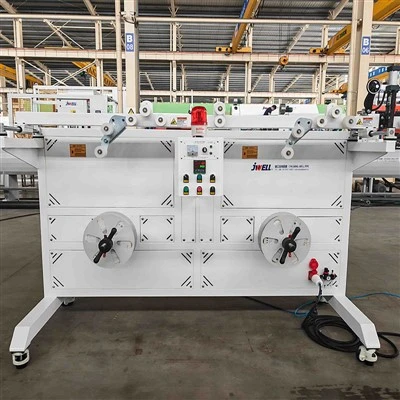
At the end of the day, the whole point of these inspection and testing procedures is to make your life easier. No one wants to wake up at 2 a.m. because your line shut down mid-production, costing you thousands in lost orders. As a pelletizing line supplier, we’re invested in your success, because your success is our success. If you’re looking to buy a new line, upgrade your current one, or even just get a second opinion on your existing setup’s inspection routine, reach out to us to chat through what you need. We’re here to walk you through every step, answer all your questions, and make sure you get a line that’s reliable, efficient, and built to last.
Pipe Extrusion Line References
- Pellet Production Equipment Safety Standards. National Board of Boiler and Pressure Vessel Inspectors.
- Testing and Inspection Protocols for Aggregate and Pelletizing Machinery. Association of Equipment Manufacturers.
- Quality Control for Pelletizing Lines in Food and Feed Production. Food and Agriculture Organization of the United Nations.
Zhejiang Jwell Pipe Equipment Co., Ltd.
As one of the most professional pelletizing line manufacturers and suppliers in China, we’re featured by quality products and good price. Please rest assured to buy cheap pelletizing line in stock here from our factory. Customized orders are welcome.
Address: No.128 Qingfeng Road, Xieqiao Town, Haining City, Jiaxing City, Zhejiang Province
E-mail: salaa@jwell.cn
WebSite: https://www.jwell-pipe.com/
